Why Japanese Tofu Expires So Fast: Japan's Two Date Labels vs. US Dates
Japan prints a safety date (shōhi kigen) or a quality date (shōmi kigen). US federal rules require one only on infant formula. What it means for tofu and eggs.
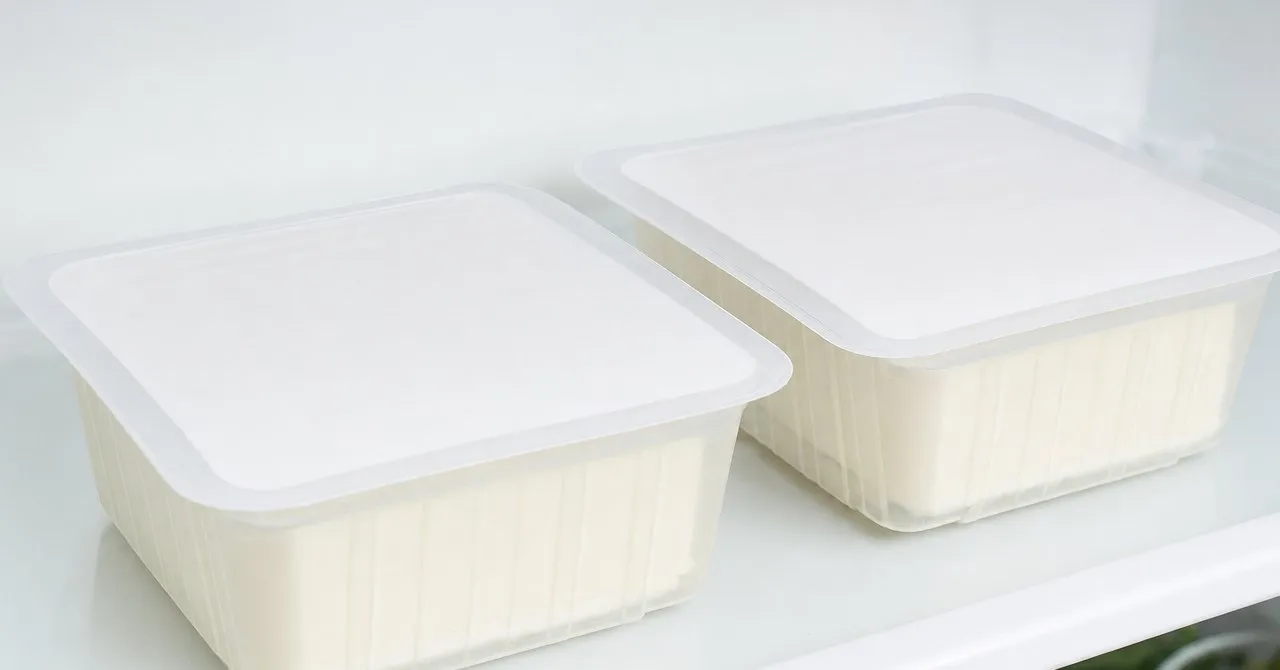
Fresh tofu in Japan is typically good for only a few days. A shelf-stable box of silken tofu in a US store can be dated more than a year after it was made. And Japanese packages use two different words for the date, 消費期限 and 賞味期限, that English tends to flatten into “expiration date.”
The short answer: Japan’s system has two labels with two different jobs. One marks the end of the period a food is expected to stay safe; the other marks the end of its best quality. US federal rules require a date on just one category of food, infant formula, and treat the rest as a manufacturer’s quality call. Tofu shows the gap most clearly. Until 2018, Japan’s rules required tofu to be kept chilled, while aseptically packed tofu was already being made in the US as a shelf-stable food.
The short answer
- 消費期限 (shōhi kigen), “use-by”: the safety date. Japan’s Consumer Affairs Agency (CAA) says it’s better not to eat the food after it. Used on boxed lunches, sandwiches and prepared dishes.
- 賞味期限 (shōmi kigen), “best-before”: the quality date. The CAA says quality may still hold after it passes. Used on sweets, cup noodles and canned goods.
- US: “Except for infant formula, product dating is not required by Federal regulations,” according to USDA’s Food Safety and Inspection Service (FSIS). The other phrases are voluntary, and FSIS says none is a safety date.
- Tofu: a Japanese tofu-industry hygiene manual lists about 3 days for ordinary refrigerated tofu and about 7 days for packed (jūten) tofu. Room-temperature aseptic tofu has been allowed in Japan only since July 13, 2018.
Japan’s two labels
Both definitions come from Japan’s Food Labeling Standards and are reprinted word for word in the CAA’s guideline for setting date labels (March 2025 edition). Paraphrased:
- Use-by (消費期限): the date up to which, if stored as directed, there’s no risk that the food will lose its safety through rotting, spoilage or other deterioration.
- Best-before (賞味期限): the date up to which, if stored as directed, all the quality you’d expect from the food can be fully maintained.
The CAA guideline says one of the two must be shown, though the Food Labeling Standards exempt a short list of items such as sugar, salt, ice cream and alcoholic drinks. Which one depends on how fast the food deteriorates. A CAA explainer chart puts boxed lunches, sandwiches and prepared dishes under use-by, and sweets, cup noodles and canned goods under best-before. For the best-before side, it adds that the quality may still be there after the date:
「当該期限を超えた場合でも、これらの品質が保持されていることがある。」 “Even after that date has passed, this quality may still be retained.” — Consumer Affairs Agency, date-label explainer
For use-by, the same chart’s wording is plainer: it’s the date after which it’s better not to eat the food.
Where “about five days” comes from
Some English-language explainers say use-by dates go on foods that last about five days or less; one travel guide puts it at “around five days or less from manufacturing.” That figure has a real source, but it was officially withdrawn in 2008. A CAA briefing paper on the history of Japan’s date labels (May 2024) quotes a February 1995 Ministry of Health and Welfare notice that described use-by foods as ones whose quality deteriorates within roughly five days, counting the day of manufacture. The 1995 rules began Japan’s switch from manufacture dates to expiry dates, which was fully in force by 1997. The switch was decided in 1994, after a 1993 government study panel concluded that showing the end of the quality period was more useful than showing when a food was made.
The CAA’s March 2025 guideline goes further than leaving the number out. It says the five-day split, set out in 1995 notices from the health and agriculture ministries, doesn’t follow from the legal definitions, was dropped by those ministries in 2008, and isn’t recommended by the CAA. The date is left to the business: for domestic products, the manufacturer, processor or seller sets it, choosing objective indicators and criteria based on the food’s characteristics. The guideline adds that the result is usually shortened, either by multiplying it by a “safety factor” below 1 or by subtracting a set amount of time. So “about five days” is a 1995 guideline that has since been withdrawn. It isn’t a rule of thumb the CAA endorses, and it was never a legal cutoff.
When a best-before date is more than three months after manufacture, the Food Labeling Standards allow it to be shown as just a year and month.
The US: one required date, and it’s on infant formula
FSIS’s “Food Product Dating” page is direct about it: “Except for infant formula, product dating is not required by Federal regulations.” For infant formula, federal regulations require a “Use-By” date, and FSIS says, “Do not buy or use baby formula after its ‘Use-By’ date.”
Everything else is voluntary. FSIS defines the common phrases this way:
| Phrase | What FSIS says it means | Safety date? |
|---|---|---|
| Best if Used By / Before | “when a product will be of best flavor or quality” | “It is not a purchase or safety date.” |
| Use-By | “the last date recommended for the use of the product while at peak quality” | Not a safety date, except on infant formula |
| Sell-By | “tells the store how long to display the product for sale for inventory management” | “It is not a safety date.” |
| Freeze-By | “when a product should be frozen to maintain peak quality” | “It is not a purchase or safety date.” |
FSIS also says that perishable foods may decline in quality after the date but “should still be safe if handled properly,” and it recommends that manufacturers and retailers who date their products use “Best if Used By.” In December 2024, USDA and FDA jointly asked for public input on date labeling and repeated that recommendation. FDA’s release notes that federal rules “do not prohibit” other phrases such as “Sell By” or “Use By,” “if they are truthful and not misleading.” FSIS notes that some state egg laws have their own dating rules.
Notice the one big wording clash. In Japan, the CAA’s own English gloss for 消費期限 is “use-by,” and it is the safety label. In the US, “Use-By” is, by FSIS’s definition, a peak-quality date on everything except infant formula. Same English words, different meanings.
Tofu: why the Japanese date is so close
Ordinary tofu: about 3 days, refrigerated
The Japan Tofu Association and the National Federation of Tofu Associations publish a HACCP hygiene manual for small tofu makers (second edition, 2020, posted on the health ministry’s website). Its product table lists a “use-by (best-before)” period of about 3 days for kinugoshi (silken), momen (cotton) and yose (loose-curd) tofu, and about 7 days for packed tofu, all stored refrigerated at 50°F (10°C) or below.
These are typical figures in an industry manual, not legal limits; each maker sets its own date. The heading “use-by (best-before)” also leaves open which label a given block carries, and the sources reviewed here don’t say which Japanese makers generally use.
Packed tofu is heated after it’s sealed in its container. The same manual describes a 194°F (90°C) bath for 40 minutes, or the equivalent, which helps explain its longer listed period. (For how packed tofu differs from the kinugoshi poured into open molds, see Silken Tofu Isn’t Lightly Pressed Tofu.)
Room-temperature tofu: not allowed in Japan until July 13, 2018
Before 2018, Japan’s food standards required tofu to be refrigerated. The health ministry’s notice announcing the change says so in its own words:
「これまで豆腐は冷蔵等しなければならないと規定していたが、」 “Until now, the standards have required tofu to be refrigerated or the like, but…” — Ministry of Health, Labour and Welfare, notice of July 13, 2018
That notice set a new standard for aseptically packed tofu, having confirmed it can be stored at room temperature. Tofu sold for room-temperature storage must test negative for microorganisms capable of growing in it, and the notice sets sterilization or microbe-removal methods for making it. It took effect the day it was published, July 13, 2018. Morinaga Milk Industry’s release adds that the CAA revised the labeling standards on September 21, 2018.
What changed was the storage rule. Long-keeping tofu already existed in Japan: Morinaga says its preservative-free kinugoshi has been sold by home delivery since 1989, and it describes the “Morinaga Tofu” line as long-keeping under refrigeration. For the new room-temperature version, Morinaga says it sterilizes the food and the container separately and fills the package aseptically. Japan’s Food Safety Commission, in a March 2018 feature on its risk assessment, describes aseptic tofu as soy milk heat-treated in a continuous-flow sterilizer, with a sterilized, filtered coagulant added, then filled and sealed aseptically. The feature lists, as a condition, sterilizing the soy milk with heat equivalent to at least 248°F (120°C) for 4 minutes. It concluded that switching aseptic tofu from refrigerated to room-temperature storage would not be expected to change the risk.
The same feature includes the detail that explains the US shelf:
「……国内流通以外では、常温保存可能な食品として、欧州等諸外国への輸出や米国での現地製造が行われています。」 “Outside the domestic market, it has been exported to Europe and other countries, and manufactured locally in the US, as a food that can be stored at room temperature.” — Food Safety Commission of Japan, Shokuhin Anzen no. 54 (March 2018)
So a kind of tofu that Japan’s rules required to be refrigerated at home was already being sold shelf-stable abroad. Morinaga’s own room-temperature kinugoshi went on sale in Japan by home delivery on January 22, 2019, with a best-before date of 195 days (about 6.4 months) from manufacture, stored at room temperature.
US tofu: pasteurized, water-packed, or aseptic
- Mori-Nu, sold by Morinaga Nutritional Foods, a wholly owned US subsidiary of Morinaga Milk Industry, says all its silken tofu is made “near Portland, Oregon.” Its FAQ says the “best used by” date “represents more than one year to the day after it was made,” and that the tofu needs no refrigeration until opened. After opening, it says to refrigerate leftovers in an airtight container and “use within 2 days maximum” (elsewhere the FAQ says not to eat leftover tofu after 3 days), and it does not recommend eating its products after the “best used by” date.
- House Foods America, which sells water-packed tofu, says its tofu “is pasteurized during the manufacturing process and is safe to eat from the container,” and that it ships “refrigerated and packaged in water.” It credits its pasteurization method with “an extended shelf life without the use of any preservatives.” Once opened, it says to eat the tofu “within two-three days.” Its FAQ doesn’t say how many days its unopened shelf life is.
Mori-Nu’s “more than one year” and Morinaga’s Japanese 195 days are different products under different rules; neither source explains the gap.
The gap in these sources lines up with differences in processing and packaging (fresh, pasteurized or aseptic), not with any claim that one country’s tofu is more fragile or more heavily preserved. And once a package is opened, both US makers quoted here give a short window: two to three days.
Eggs: Japan’s best-before is the raw-eating window
Eggs are a case where a Japanese best-before date carries an extra meaning. Japan’s Food Safety Commission puts it in one line:
「卵の賞味期限は生で食べられる期限を示したもの。」 “An egg’s best-before date shows the period during which it can be eaten raw.” — Food Safety Commission of Japan, Kids Box (July 2022)
The egg industry’s fair-trade council’s labeling rules cap that date at 21 days from laying. In the US, FSIS says dates on USDA-graded eggs are optional; if a carton is dated, an expiration (“Sell-By”/“EXP”) date can be no more than 30 days from packing, and a “Use By” or “Best if Used Before” date no more than 45 days including the packing day. FSIS advises everyone against eating raw or undercooked eggs. The full story, including Japan’s packing-center rules, is in Raw Eggs and Tamago Kake Gohan.
Japan vs. US at a glance
| Japan | US (federal) | |
|---|---|---|
| Is a date required? | Yes, on most packaged processed foods under the Food Labeling Standards, as use-by or best-before. Exempt items include sugar, salt, ice cream, chewing gum and alcoholic drinks | Only on infant formula (“Use-By”) |
| Safety label | 消費期限 (use-by): “better not to eat” after it | None, except infant formula |
| Quality label | 賞味期限 (best-before): quality may still hold after it | “Best if Used By” (recommended), “Use By,” “Sell By,” “Freeze By,” all voluntary |
| Who sets the date | Manufacturer, processor or seller, from objective indicators, usually shortened by a safety factor | Manufacturer or retailer, if they choose to date |
| Ordinary refrigerated tofu | About 3 days (industry manual), at 50°F (10°C) or below | Varies by brand; House Foods is pasteurized and water-packed |
| Shelf-stable tofu | Allowed only since July 13, 2018; Morinaga’s: 195 days | Mori-Nu: “more than one year” from manufacture |
| Eggs | Best-before = raw-eating period, up to 21 days from laying | Dates optional on USDA-graded eggs; 30 or 45 days from packing if used |
FAQ
What is the difference between shōhi kigen and shōmi kigen?
消費期限 (shōhi kigen) is a use-by date: the end of the period a food is expected to stay safe if stored as directed. Japan’s Consumer Affairs Agency says it’s better not to eat the food after it. 賞味期限 (shōmi kigen) is a best-before date: the end of the period the food keeps its full expected quality. The CAA says quality may still hold after it passes.
Why does tofu expire so quickly in Japan?
Tofu sold in Japan has traditionally been fresh and refrigerated, and a tofu-industry hygiene manual lists about 3 days for it (about 7 for packed tofu). Room-temperature aseptic tofu wasn’t permitted under Japan’s food standards until July 13, 2018, so shelf-stable tofu is a recent arrival on the Japanese market.
Is “use by” the same in Japan and the US?
No. In Japan, “use-by” is the CAA’s English gloss for 消費期限, the safety label. In the US, FSIS defines “Use-By” as a peak-quality date and says it is not a safety date, except on infant formula.
Is a Japanese egg’s best-before date about safety or quality?
Japan’s Food Safety Commission says an egg’s best-before date shows how long it can be eaten raw. It also says eggs past that date, or with cracked shells, should be cooked thoroughly and eaten soon. See Raw Eggs and Tamago Kake Gohan.
How this article was researched
This article is based mainly on Japanese-language official sources: the Consumer Affairs Agency’s date-labeling guideline and its history of the date-labeling system, a health ministry notice on the 2018 tofu standard, a Food Safety Commission feature on aseptic tofu, the tofu industry’s HACCP manual, and Morinaga Milk Industry’s release on room-temperature tofu. US rules come from USDA FSIS and FDA, and US product details from House Foods’ and Mori-Nu’s official FAQs. Japanese quotations were translated by us. Nothing here was tested by this site, and storage guidance is attributed to the agency or manufacturer that gave it.
Sources
- 食品期限表示の設定のためのガイドライン — Consumer Affairs Agency, guideline for setting use-by and best-before dates, March 2025 (PDF)
- 食品の期限表示制度の変遷等 — Consumer Affairs Agency, history of Japan’s date-labeling system, May 2024 (PDF)
- 消費期限と賞味期限 — Consumer Affairs Agency, explainer chart on use-by and best-before (PDF)
- 食品、添加物等の規格基準の一部を改正する件について(豆腐の規格基準の一部改正)— Ministry of Health, Labour and Welfare notice 生食発0713第9号, July 13, 2018 (PDF)
- 食品安全 第54号 — Food Safety Commission of Japan, feature on room-temperature storage of aseptic tofu, March 2018 (PDF)
- HACCPの考え方を取り入れた衛生管理のための手引書(小規模な豆腐類製造事業者向け)— Japan Tofu Association and National Federation of Tofu Associations, HACCP manual for small tofu makers (PDF)
- 冷蔵保存が当たり前だった『お豆腐』が常温保存可能に! — Morinaga Milk Industry, release on room-temperature tofu, December 2018 (PDF)
- キッズボックス 2022年7月 — Food Safety Commission of Japan, Kids Box on eggs (PDF)
- 鶏卵の表示で留意するポイント — Egg Fair Trade Council, egg labeling points, February 2020 (PDF)
- Food Product Dating — USDA Food Safety and Inspection Service
- Shell Eggs from Farm to Table — USDA Food Safety and Inspection Service
- USDA-FDA Seek Information About Food Date Labeling — FDA press announcement, December 3, 2024
- FAQs — House Foods America
- FAQ — Mori-Nu
- Overseas Affiliates — Morinaga Milk Industry (Morinaga Nutritional Foods, Inc.)
- 一般用加工食品の表示について — Osaka Prefecture, processed-food labeling, including foods exempt from date labels
- Japanese Food Expiration Dates: Shoumikigen (best-before) vs Shouhikigen (use by) — Get Around Japan