Is Sashimi Safe in Japan? Anisakis, Wasabi Myths and Why Salmon Sashimi Is New
Japan reported 280 Anisakis food-poisoning incidents in 2025. What its agencies say about raw fish, wasabi myths, and how salmon sashimi began.
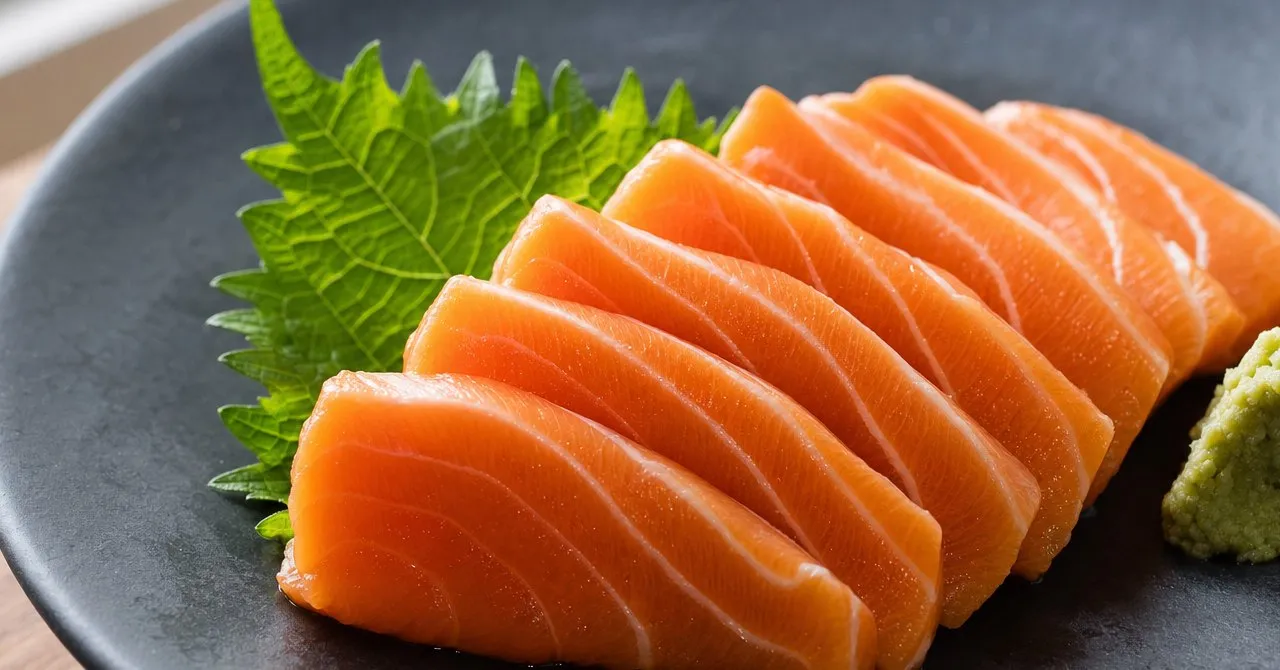
One explanation you’ll find in English goes like this: Japan eats a lot of raw fish and people don’t get sick, so fresh fish must be safe, and the wasabi probably helps. Japan’s own health agencies disagree. A parasite in raw fish, Anisakis, ranks among Japan’s leading causes of food poisoning every year.
The short answer is that sashimi in Japan is managed, not assumed. Japan’s health ministry (MHLW) tells cooks and businesses to gut fish promptly, look for larvae, and, for businesses, freeze or cook. It also says outright that wasabi, vinegar and soy sauce don’t kill the parasite.
And the fish many Americans think of first, salmon, is a newcomer to Japan’s raw-fish table. By one Japanese sushi chain’s account, salmon wasn’t eaten raw before the 1980s. Ainu food culture in Hokkaido has two exceptions, and neither is fresh raw slices: one freezes the fish, which a Japanese government source says helped against parasites, and the other minces it, which lowers the risk. Here is what Japanese sources say, and where they stop.
The short answer
- Japan counts Anisakis cases every year. In 2025, Japan reported 280 Anisakis food-poisoning incidents and 283 patients, the second-highest cause by number of incidents.
- Fresh isn’t the whole rule. MHLW also says to gut fish promptly and look for larvae, and tells businesses to freeze or cook.
- Wasabi, vinegar, salt and soy sauce don’t kill Anisakis larvae as used in ordinary cooking, according to MHLW and Japan’s agriculture ministry (MAFF).
- Salmon was mostly a cooking fish in Japan. Raw salmon spread after Norway began promoting farmed salmon in Japan in the mid-1980s. Two Ainu dishes are exceptions, and both handle the fish in ways that lower the parasite risk: ruibe is frozen, and chitatap is minced.
- The FDA says the safest route is to cook seafood. See our sushi-grade fish article.
Japan’s own numbers
Anisakis is a top cause of food poisoning in Japan
MHLW’s 2025 summary names the same three causes as most frequent by number of incidents, “as in other years”: norovirus, Campylobacter and Anisakis, together about 80% of all incidents. Kyoto Prefecture, citing MHLW’s national totals, gives 1,172 incidents and 24,727 patients nationwide, with Anisakis second at 280 incidents and 283 patients.
| Year | Anisakis incidents | Anisakis patients | Source |
|---|---|---|---|
| 2023 | 432 (the leading cause by incidents that year) | 441 | Food Safety Commission of Japan |
| 2024 | not found | 337 | MHLW |
| 2025 | 280 | 283 | MHLW totals, via Kyoto Prefecture |
MHLW’s 2025 summary states the trend:
アニサキスによる食中毒の事件数及び患者数は、3年連続で減少した。 — Anisakis food-poisoning incidents and patients both fell for the third year in a row. — MHLW, 2025 food poisoning summary
We didn’t find the 2024 incident count, or any official explanation for the decline, so we don’t offer one.
Norovirus incidents often involve many patients each: Kyoto’s figures give norovirus 18,566 of the 24,727 patients in 2025, about three-quarters. Anisakis incidents usually involve one patient each, so MHLW’s summary puts it at 23.9% of 2025 incidents but only 1.1% of patients.
Reported cases may be a fraction of the real number
Official counts include only reported cases. A 2022 study in the CDC journal Emerging Infectious Diseases, by researchers at Japan’s National Institute of Infectious Diseases and others, used health-insurance claims instead. They wrote that “we estimated the average annual incidence of anisakiasis in Japan to be 19,737 cases” for 2018–2019, and that officially reported numbers were “considerably lower, <1/40.” That’s an estimate, not a count.
How Japan manages Anisakis
A shorthand you’ll find in English is that Japan’s raw fish is safe because it’s fresh. Freshness is part of MHLW’s advice, but only part.
MHLW’s Anisakis page splits its advice into two lists.
For consumers:
- Choose fresher fish, and if you buy a whole fish, remove the guts promptly.
- Don’t eat the guts raw.
- Look for larvae and remove them.
For businesses, the same steps (with “don’t serve the guts raw”), plus two more:
- Freeze: −4°F (−20°C) for at least 24 hours.
- Or cook: 158°F (70°C) or above, or 140°F (60°C) for 1 minute.
Japan’s Food Safety Commission explains why the guts matter: larvae in the organs can move into the flesh as freshness drops and time passes after the catch. So promptly removing the guts, and the belly meat around them, is also considered effective prevention.
Why Japan’s 24 hours differs from the FDA’s 7 days, and what Japan’s 生食用 (seishoku-yō, “for raw eating”) label covers, are explained in what “sushi grade” actually means. For other raw foods, see Japan’s raw food rules.
Wasabi, vinegar and soy sauce don’t kill Anisakis
What English-language pages say
One answer you’ll find in English to “why is wasabi served with sushi?” is that it disinfects the fish. Yuzu Omakase, a Bangkok-based omakase restaurant’s English-language blog, says wasabi’s pungent compound “kills bacteria and parasites commonly found in raw seafood, including Anisakis larvae and Vibrio bacteria.” To be fair, the same page adds in its FAQ that wasabi “does not sterilize fish completely” and that sourcing, temperature control and handling remain essential.
What Japan’s agencies say
MHLW addresses the idea directly:
一般的な料理で使う食酢での処理、塩漬け、醤油やわさびを付けても、アニサキス幼虫は死滅しません。 — Treating fish with vinegar as used in ordinary cooking, salting it, or adding soy sauce or wasabi does not kill Anisakis larvae. — MHLW
MAFF’s consumer page says the same about vinegar, salt, soy sauce and wasabi, and Tokyo’s Nerima City specifies seasonings “at the amounts and concentrations used in ordinary cooking.” The agencies mean food as actually seasoned, not lab concentrations. In their guidance, a dab of wasabi isn’t a safety step.
If you’re curious what’s actually in the green paste, see real wasabi vs. horseradish.
Shime saba: vinegar-cured, not parasite-free
Vinegar-cured mackerel, しめさば (shime saba), is the dish where this myth matters most, because the curing looks like a treatment. MAFF is blunt:
酢で締めるだけではアニサキスは死にません! — Curing with vinegar alone does not kill Anisakis! — MAFF
MAFF’s risk profile sheet (2019 version) counted 79 shime saba cases among the 140 mackerel-linked Anisakis cases it reviewed for 2016–2018.
MAFF’s advice for people making shime saba is to freeze the mackerel before or after curing it in vinegar. For home freezers, it says to use the “strong” setting, confirm −4°F (−20°C) or below, and freeze for at least 24 hours once solid.
Why salmon sashimi is new in Japan
In most Japanese cooking, salmon was a fish you cooked
In mainstream Japanese cooking, raw salmon is a recent arrival. A 2025 press release from Kura Sushi, one of Japan’s large conveyor-belt sushi chains, marking 40 years of salmon sushi, says that until the 1980s salmon wasn’t even eaten raw. That’s an anniversary line from a company, and taken literally it goes too far (see the Ainu exceptions below). The release sets farmed salmon against the traditional fish:
加熱しないと食べられない鮭とは異なり — Unlike sake (salmon), which can’t be eaten without cooking… — Kura Sushi press release, October 2025
Japanese public health sources help explain why the traditional fish is treated that way. MHLW lists サケ (salmon) among the fish Anisakis infests. And a 2011 literature-review report prepared for Japan’s Food Safety Commission names salmonid fish, specifically cherry salmon (サクラマス) and pink salmon (カラフトマス), as a source of the Japanese broad tapeworm (日本海裂頭条虫, Nihonkai retsutō jōchū). It lists the foods that carry the parasite as raw slices, sushi and masu-zushi (pressed trout sushi) made from these fish.
We didn’t find a Japanese source stating that parasites are why salmon was traditionally cooked. The custom and the risk are documented separately.
Two Ainu exceptions, and why they’re special
Ainu food culture in Hokkaido does include salmon that isn’t cooked. But both dishes are exceptions, and both handle the fish in a way that bears on the parasite problem: a Japanese government source credits one with working against parasites, and the other matches current public-health advice.
Ruibe: salmon eaten frozen. A November 2025 newsletter from MAFF’s Hokkaido regional office describes ruibe (ルイベ) as salmon or trout that is frozen and eaten as sashimi without thawing. It traces the dish to the Ainu, who buried salmon caught in late autumn and early winter in snow and sliced it thin while still frozen. The newsletter adds:
寄生虫対策にも有効だったこの方法 — this method, which also worked against parasites — MAFF Hokkaido Regional Office, Washoku Culture Network Hokkaido, November 28, 2025
That’s the same principle as Japan’s modern rule of freezing at −4°F (−20°C) for at least 24 hours. We haven’t seen figures on how cold traditional snow storage got, so we don’t treat old-style ruibe as meeting that rule. Either way, ruibe is frozen fish, not fresh raw salmon.
Chitatap: salmon minced fine. A 2026 booklet on Hokkaido’s seafood traditions from the same office describes chitatap (チタタプ), a traditional Ainu method of chopping fish or game into a mince with a blade. It says:
新鮮な食材は生で食べることもあり、なかでもサケを使ったチタタプは、秋の限られた時期にだけ作られる特別な料理でした。 — Fresh ingredients were sometimes eaten raw, and among them, chitatap made with salmon was a special dish made only during a limited time in autumn. — MAFF Hokkaido Regional Office, 2026
The booklet says salmon chitatap is made by chopping heads, gills, milt, kelp and green onion, and its chitatap section doesn’t mention parasites. Fine chopping does appear in Japanese Anisakis advice, though: Tokyo’s Minamitama public health center tells home cooks making namerō, a minced raw-fish dish, to chop the fish finely. For businesses, the same page calls freezing or cooking the most reliable prevention, so chopping lowers the risk rather than removing it.
So “Japan never ate raw salmon” isn’t quite accurate, but the exceptions are a frozen dish and a minced one, made in season. What arrived in the 1980s was something different: raw salmon sliced fresh as an everyday sushi and sashimi fish across the country.
鮭 and サーモン: two words, two products
| 鮭 (sake or shake) | サーモン (sāmon) | |
|---|---|---|
| What it refers to in these sources | Salmon as Japan has traditionally eaten it | Farmed salmon, such as Norway’s; the word comes from English |
| How it’s eaten | Cooked | Raw, as sushi and sashimi |
In the Kura Sushi release, the Norwegian embassy’s fisheries counsellor in Japan says Norway presented its salmon as “completely different” from the sake Japanese people had cooked, and gives the absence of parasites in farmed fish as a selling point. That is the seller’s framing. Japan’s agriculture ministry, in its Anisakis risk profile sheet, makes a narrower one: salmon farmed on parasite-free formulated feed can be produced safe to eat as sashimi.
Treat the two words as market usage, not a safety guarantee. On a Japanese package, a 生食用 or 刺身用 (“for sashimi”) label is what signals raw use.
Project Japan: how Norway sold raw salmon
The Norwegian Seafood Council tells the story from its side. In a 2025 release marking the 40th anniversary, it says that “in 1985, a delegation of Norwegians travelled to Tokyo with the intent to sell fish to the Japanese,” which led to an initiative called Project Japan, “led by former Minister of Fisheries Thor Listau.” Demand for sushi in Japan in the 1980s, it says, “outweighed the supply of tuna.”
The council says “the initiative was not immediately successful” and took about ten years of relationship-building. Its export figures show the scale: 2 tonnes of salmon to Japan in 1980, and more than 45,000 tonnes twenty years later.
Unseen Japan’s English-language account gets the outline right, describing raw salmon as “not really part of the Japanese diet before the 1980s.” Some details it gives, such as the program’s formal start year and the Japanese companies involved, we couldn’t confirm in a primary source.
Conveyor-belt sushi made it a favorite
Both sources in Kura Sushi’s release credit conveyor-belt sushi (回転寿司, kaitenzushi) with making raw salmon popular. The company dates the start to the 1980s, when salmon sushi went on sale at conveyor-belt chains that were growing fast at the same time. The counsellor describes 1992 as the turning point: an oversupply of Norwegian salmon led Norway to offer a Japanese company 7,000 tonnes for use in conveyor-belt sushi. Taken together, raw salmon took hold from the mid-1980s through the early 1990s.
Salmon tops a long-running annual online survey of 3,000 people across Japan aged 15–59 who go to conveyor-belt sushi restaurants at least once a month. The survey was released in 2021 by Maruha Nichiro and in 2026 by the same company under its new name, Umios:
| Survey year | No. 1 topping respondents say they often eat | Released by |
|---|---|---|
| 2021 | Salmon (45.4%), 10th year in a row since 2012 | Maruha Nichiro |
| 2026 | Salmon (47.7%), 15th year in a row since 2012 | Umios (formerly Maruha Nichiro) |
So salmon sashimi as Japan’s everyday sushi fish isn’t “traditional Japanese” in the sense of centuries old. It is, though, thoroughly Japanese now, and a dish built on a Japan–Norway collaboration is no less legitimate for being recent.
What US agencies say
US guidance is short and more conservative than Japan’s. The FDA’s consumer seafood page (content current as of March 5, 2024) says “if you choose to eat raw fish anyway, one rule of thumb is to eat fish that has been previously frozen,” but also that “freezing doesn’t kill all harmful germs. That’s why the safest route is to cook your seafood.” It lists pregnant women, young children, older adults and people with weakened immune systems among those who should avoid raw or undercooked seafood, with sashimi as an example.
FDA freezing conditions and what to ask at a US fish counter are in what “sushi grade” actually means. See also raw eggs and tamago kake gohan and why Japan doesn’t eat raw freshwater fish.
None of this is medical advice.
FAQ
Is sashimi safe in Japan? Japan’s agencies don’t treat it as automatically safe. Japan reported 280 Anisakis incidents in 2025, and MHLW’s advice covers gutting, inspection and, for businesses, freezing or cooking.
Does wasabi kill parasites in sushi? Not according to Japan’s health ministry. MHLW says vinegar as used in ordinary cooking, salting, soy sauce and wasabi do not kill Anisakis larvae.
Does vinegar in shime saba kill Anisakis? No. MAFF says curing with vinegar alone does not kill Anisakis, and its risk profile counted 79 shime saba cases for 2016–2018.
Is salmon sushi traditional in Japan? Not as everyday sushi. Kura Sushi says salmon wasn’t eaten raw before the 1980s, though Ainu food culture has two exceptions: ruibe, salmon eaten frozen, and chitatap, raw salmon minced fine. Raw salmon spread after a Norwegian delegation came to Tokyo in 1985 to sell fish, which led to what Norway calls Project Japan, and through conveyor-belt sushi.
What’s the difference between 鮭 and サーモン? In the industry sources we read, 鮭 (sake) is the salmon Japan traditionally cooked, and サーモン (sāmon) is farmed salmon, such as Norway’s, sold for eating raw. Treat it as market usage; on a package, a 生食用 or 刺身用 label is what signals raw use.
How common is Anisakis in Japan? Officially, a few hundred reported incidents a year (432 in 2023, 280 in 2025), with 337 patients reported for 2024. A 2022 study estimated about 19,737 cases a year from health-insurance claims for 2018–2019, far more than reported.
How this article was researched
The Japanese side comes from Japanese-language official sources: MHLW’s Anisakis page and 2025 food-poisoning summary, MAFF’s Anisakis page, the Food Safety Commission’s risk profile and a 2011 report prepared for it on tapeworms, MAFF’s Hokkaido office on Ainu food culture, and prefectural and municipal pages from Kyoto, Nerima and Tokyo’s Minamitama public health center. Salmon history comes from company and industry releases (Kura Sushi, the Norwegian Seafood Council, and the Maruha Nichiro and Umios surveys), each attributed in the text. Japanese quotations are kept short and translated by us. Where we couldn’t confirm something, such as the 2024 incident count or a primary source on Project Japan’s formal start, we say so or leave it out. This article contains no recipe and is not medical advice.
Sources
Japanese official sources:
- 厚生労働省「アニサキスによる食中毒を予防しましょう」 — MHLW: preventing Anisakis food poisoning
- 厚生労働省「令和7年食中毒発生状況の概要」 — MHLW: 2025 food poisoning summary (PDF)
- 厚生労働省「食中毒予防:アニサキスによる食中毒を予防しましょう!」 — MHLW web magazine: Anisakis (2024 patient count)
- 農林水産省 北海道農政事務所「受け継ぎたい 北海道の食 vol.3 水産物編」 — MAFF Hokkaido Regional Office: Hokkaido seafood food culture (PDF, 2026)
- 農林水産省 北海道農政事務所「地域の和食文化ネットワーク北海道」2025年11月28日号 — MAFF Hokkaido Regional Office newsletter: ruibe (PDF)
- 農林水産省「アニサキス」 — MAFF: Anisakis
- 食品安全委員会「食品健康影響評価のためのリスクプロファイル~アニサキス~」 — Food Safety Commission of Japan: Anisakis risk profile (PDF)
- 食品安全委員会「食品により媒介される感染症等に関する文献調査報告書」(2011年3月)裂頭条虫 — literature-review report prepared for the Food Safety Commission of Japan: broad tapeworms (PDF)
- 農林水産省「食品安全に関するリスクプロファイルシート(寄生虫)」アニサキス — MAFF: risk profile sheet, Anisakis (PDF)
- 京都府「食の安全」 — Kyoto Prefecture: national food poisoning figures for 2025
- 練馬区「アニサキス」 — Nerima City, Tokyo: Anisakis
- 東京都南多摩保健所「アニサキス」 — Tokyo Metropolitan Minamitama Public Health Center: Anisakis
Research:
Industry and company sources:
- くら寿司 プレスリリース「サーモン寿司が誕生して今年で40周年」 — Kura Sushi: 40 years of salmon sushi (October 2025)
- Norwegian Seafood Council — Norwegian salmon continues to lead global sushi category 40 years on from its introduction to Japan
- マルハニチロ「回転寿司に関する消費者実態調査」 — Maruha Nichiro: conveyor-belt sushi consumer survey (2021)
- Umios「回転寿司に関する消費者実態調査2026」 — Umios: conveyor-belt sushi consumer survey (2026)
- マルハニチロ「商号の変更に関するお知らせ」 — Maruha Nichiro: notice of name change to Umios (PDF, 2025)
US official source:
English-language examples:
- Yuzu Omakase — Why Is Wasabi Always Served with Sushi?
- Unseen Japan — Shake (鮭) vs. Salmon (サーモン): How Norwegian Salmon Became a Sushi Staple in Japan
Part of our look at what English-language Japanese recipes get wrong.