Japanese Pantry, American Store
The Three Umami Compounds: Glutamate, Inosinate and Guanylate
Umami comes mainly from glutamate, inosinate and guanylate. Who found each one, which foods contain them, and why pairing them matters.
“Umami” shows up on menus, sauce bottles and snack bags, usually as a loose word for “savory” or “rich.” That makes it sound like a vibe. It isn’t. In Japanese food science, umami is a specific taste with specific causes, and the causes have names.
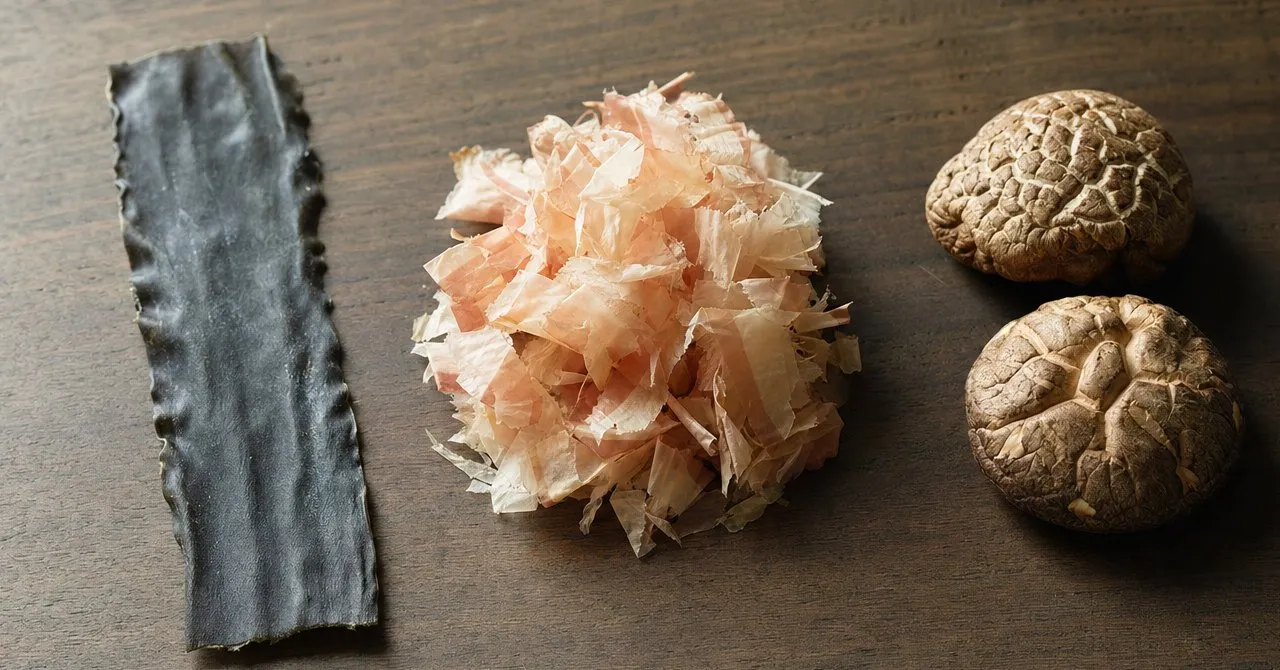
The short answer: three compounds do most of the work. Glutamate is an amino acid, and kombu is famous for it. Inosinate and guanylate are nucleotides; katsuobushi is the classic source of the first and dried shiitake of the second. Each was identified by a Japanese researcher between 1908 and 1957. Glutamate combined with either nucleotide tastes much stronger than glutamate alone, and dashi, the base of Japanese cooking, is the classic way to use that effect.
None of this is limited to Japanese food. Tomatoes, aged cheese, anchovies and meat carry the same compounds. Below: who found each one, where it’s found, how they combine, and what seasonings contain.
The short answer
| Compound | Chemical family | Classic Japanese source | Identified by | Year |
|---|---|---|---|---|
| Glutamate | Amino acid | Kombu (kelp) | Kikunae Ikeda | 1908 |
| Inosinate | Nucleotide | Katsuobushi (dried bonito) | Shintaro Kodama | 1913 |
| Guanylate | Nucleotide | Dried shiitake | Akira Kuninaka | 1957 |
The Umami Information Center, a Japanese nonprofit founded in 1982 with support from Japan’s umami seasoning industry association, publishes research and food data on umami. It puts it in one line:
「主なうま味成分はグルタミン酸やイノシン酸、グアニル酸です。」 “The main umami components are glutamate, inosinate and guanylate.” — Umami Information Center
Umami as a basic taste
The Umami Information Center describes umami as a taste in its own right, alongside the four that Western science already recognized:
「うま味は、甘味、酸味、塩味、苦味に続く5 番目の味です。」 “Umami is the fifth taste, after sweet, sour, salty and bitter.” — Umami Information Center
The idea started with a chemist at Tokyo Imperial University. According to the center, Kikunae Ikeda began working on it in the spring of 1907, prompted by a bundle of kombu bought for making dashi. He noticed that kombu dashi had a clear taste he had also met abroad, in tomatoes, asparagus, meat and cheese, and he set out to find the compound responsible. Starting from dried kombu, he identified it as glutamate. The center’s illustration of the work notes that 12 kg (about 26 lb) of kombu yielded 30 g (about 1 oz) of glutamate.
Ikeda named the taste umami. He filed a patent in April 1908 for a seasoning made mainly from a glutamate salt, and it was registered on July 25 of that year. That patent became AJI-NO-MOTO, which went on sale in 1909, according to Ajinomoto’s company history.
You’ll sometimes see 1907 instead. The Japanese food company Fujicco’s educational material on kombu dates the discovery itself to 1907. The Umami Information Center says Ikeda’s work began in the spring of 1907 and dates the discovery to 1908, the year of the patent. That may be where the earlier date comes from, but Fujicco doesn’t say.
Recognition outside Japan took much longer. A 2015 review of umami research by Kenzo Kurihara, published in BioMed Research International, says umami “has not been recognized in Europe and America for a long time” and that it was internationally recognized as the fifth basic taste “in the late 1900s.” The review cites receptor studies from 2000 and 2002 that helped explain how the tongue detects it.
Two more compounds: inosinate and guanylate
Ikeda was also curious about katsuobushi. He gave the problem to his student Shintaro Kodama, who showed in 1913 that katsuobushi’s umami comes from a salt of inosinic acid. Ajinomoto’s company history adds that the compound’s structure was unclear and it was hard to separate, so it was decades before inosinate became a commercial seasoning.
The third compound came from the soy sauce maker Yamasa. In 1957 a Yamasa researcher, Akira Kuninaka, found that a salt of guanylic acid has an umami taste. Kurihara’s review dates the finding to 1957 and cites Kuninaka’s paper from 1960, so you may see either year.
Sources split on who connected guanylate to shiitake. The Umami Information Center says another researcher, Nakajima (中島寛郎), later showed it was shiitake’s umami compound. Ajinomoto’s company history, in a passage about Kuninaka, says guanylate was later found to be dried shiitake’s umami compound and names no one else, which reads as crediting Kuninaka. English-language summaries such as Wikipedia’s “Umami” entry fold it into a single 1957 discovery “present in shiitake mushrooms.” That is a reasonable shorthand, but the Japanese sources tell it in two steps, and they don’t agree on who took the second one.
Inosinate and guanylate are both nucleotides, which is why Japanese sources group them as kakusan-kei (“nucleotide-type”) umami compounds, separate from glutamate.
Where each one is found
The Umami Information Center publishes umami content figures for dozens of foods. The figures below are in milligrams per 100 g (100 g is about 3.5 oz). The center notes that some values are ranges because of variation between individual foods and seasons. A blank cell means the center lists no figure, not necessarily zero.
| Food | Glutamate | Inosinate | Guanylate |
|---|---|---|---|
| Rausu kombu* | 2,290–3,380 | ||
| Ma-kombu* | 1,610–3,050 | ||
| Dried shiitake | 1,060 | 150 | |
| Fresh shiitake | 70 | ||
| Katsuobushi | 30–40 | 470–700 | |
| Niboshi (dried sardines) | 40–50 | 350–800 | |
| Dried nori | 170–1,350 | 1–40 | 3–80 |
| Koikuchi (regular) soy sauce | about 980–1,680 | ||
| Usukuchi (light-colored) soy sauce | about 730 | ||
| Tamari soy sauce | about 1,720 | ||
| Miso* | 200–700 | ||
| Tomato | 246 | ||
| Parmigiano Reggiano, 24 months | 1,680 | ||
| Parmigiano Reggiano, 48 months | 2,220 | ||
| Cheddar (US), 1 year | 173 | ||
| Cheddar (US), 10 years | 718 | ||
| Mozzarella | 0 | ||
| Anchovy | 630 | 0 | |
| Chicken | 20–50 | 150–230 | |
| Pork | 10 | 230 | |
| Beef | 10 | 80 |
*From the center’s summary table, which doesn’t print a unit or a measurement source; the center’s kombu and miso pages give their figures only in charts. The other rows come from the center’s individual food pages, which label their figures mg/100 g. Where both give a figure, most summary-table numbers are identical to the food pages (dried shiitake, katsuobushi, niboshi, nori, anchovy, meats), so we read the summary table as mg/100 g. Tomato, cheese and soy sauce differ: the summary table gives one figure or range (tomato 150–250, soy sauce 400–1,700), while the food pages give 246 for tomato and break cheese out by age and soy sauce by type. We use the food-page figures; the soy sauce page calls its figures reference values. (For the soy sauce types themselves, see Japanese soy sauce types.)
A few patterns stand out:
- Glutamate comes from plants, seaweed and aged or fermented foods. Kombu, tomatoes, aged cheese, soy sauce and miso lead.
- Inosinate comes mainly from meat and fish. Katsuobushi, niboshi and pork are high; kombu and tomatoes have none listed.
- Guanylate is the mushroom compound. Dried shiitake is the standout in the table.
Ripening, aging and processing change the numbers. According to the center, tomatoes gain glutamate as they ripen to deep red, and the longer a cheese ages, the more of its protein breaks down into free amino acids. That’s why 48-month Parmigiano outscores 24-month, and 10-year cheddar outscores 1-year. Katsuobushi gains inosinate during smoke-drying and mold-curing (more on that in our katsuobushi article). And dried shiitake forms guanylate as it dries, while the loss of water concentrates its glutamate too. The center’s mushroom page says fresh mushrooms contain only a little guanylate and that cooking is said to increase it, a claim the center itself hedges.
Synergy: why the pairs matter
Kuninaka, the same Yamasa researcher, found that glutamate and the nucleotides boost each other:
「国中はグルタミン酸塩とイノシン酸塩またはグアニル酸塩の間に、大きな相乗作用があることを発見しました。」 “Kuninaka discovered a strong synergy between glutamate and inosinate or guanylate.” — Umami Information Center
Put simply, adding inosinate or guanylate to glutamate makes the umami taste much stronger than glutamate alone. Ajinomoto’s company history describes the same finding: nucleotides combined with MSG raise umami synergistically.
How much stronger depends on the mix. The center’s chart, based on a 1967 study by Shizuko Yamaguchi in the Journal of Food Science, plots umami strength against the share of inosinate in an MSG-and-inosinate mixture. Strength climbs steeply as inosinate is added, and then:
「さらにIMPの割合を増やすと相乗作用は減少します。」 “Increasing the proportion of IMP [inosinate] further reduces the synergy.” — Umami Information Center
Both the center and Kurihara’s review give a size for the effect. Neither states, in its text, the mixing ratio that number applies to, and the ratio changes the result. So we aren’t repeating a multiplier here. Some English-language pages do give one with a condition attached. SushiSushi, a UK online Japanese-food retailer, says that “at a one-to-one ratio, perceived umami reaches seven to eight times the intensity of either alone.” The page cites no study for the ratio, and we couldn’t confirm the one-to-one condition in the Japanese sources we read, so treat it as unverified.
The takeaway doesn’t need a number: pair a glutamate-rich ingredient with an inosinate- or guanylate-rich one.
How Japanese cooking combines them
Japanese cooking puts those pairs together, often in the first step of a dish.
| Combination | Glutamate from | Nucleotide from |
|---|---|---|
| Awase dashi | Kombu | Katsuobushi (inosinate) |
| Shōjin dashi (plant-only) | Kombu | Dried shiitake (guanylate) |
| Miso soup with niboshi dashi | Miso | Niboshi (inosinate) |
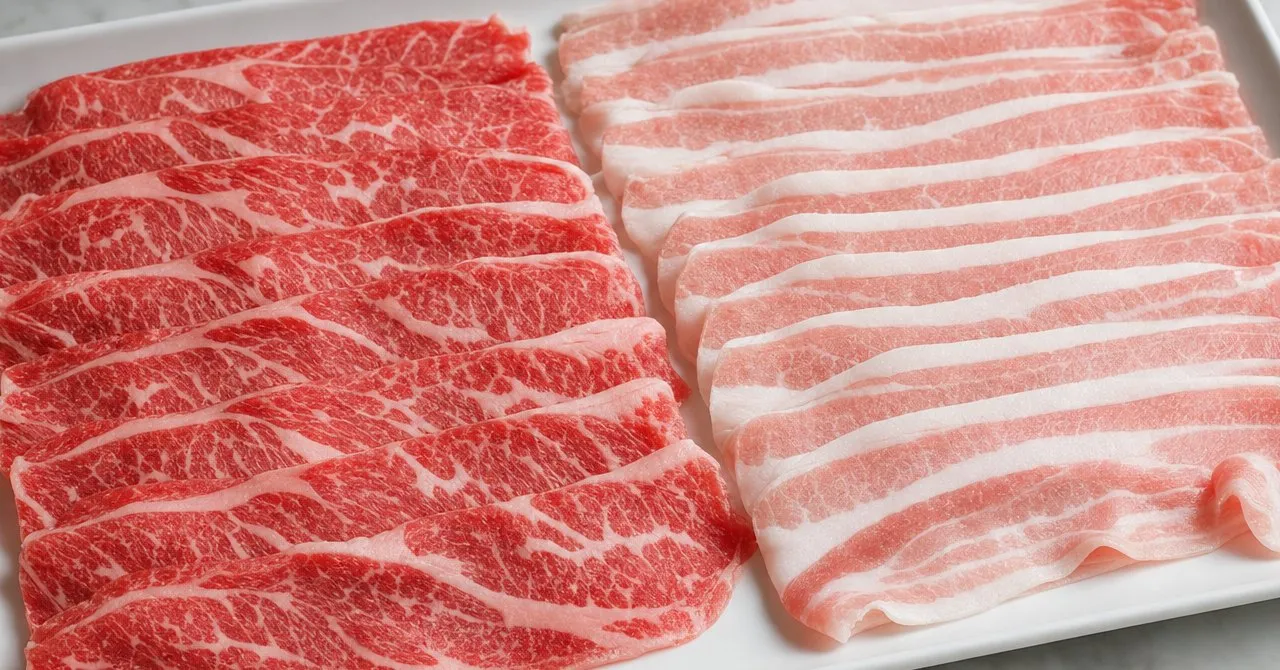
| Sukiyaki | Soy sauce, vegetables | Beef (inosinate); mushrooms (guanylate) |
Awase dashi. Kombu plus katsuobushi is the textbook case. The Umami Information Center calls ichiban dashi made this way the cooking method that puts umami synergy to use most effectively, and the foundation of washoku. For how Japanese makers actually extract it, and why it’s different from a simmered Western stock, see Dashi Isn’t Fish Stock.
Shōjin dashi. Dashi made only from plant ingredients is called shōjin dashi. Pairing kombu with dried shiitake gets the synergy without fish, through guanylate instead of inosinate. The center explains why shiitake should be rehydrated cold. The enzyme that produces guanylate works best at about 140–158°F (60–70°C), while the enzyme that breaks guanylate down works best at about 113–122°F (45–50°C). At room temperature, the center says, the guanylate breaks down, so it recommends soaking dried shiitake in the refrigerator.
Miso soup. The center notes that miso contains glutamate, so using an inosinate-rich niboshi dashi for miso soup produces the synergy too. More on how the soup fits into a Japanese meal in Miso soup: how Japan eats it, and on the paste itself in Types of Japanese miso.
Sukiyaki. The center’s meat page calls sukiyaki a representative Japanese dish that layers the umami of beef with that of vegetables, mushrooms and soy sauce. The center doesn’t name compounds for it; the table row above maps them using the content figures earlier in this article. Regional styles are covered in Sukiyaki: Kanto vs. Kansai.
This isn’t uniquely Japanese. The same center points to tomato sauce served with meat or fish as glutamate meeting inosinate. What Japan added was the science: Japanese researchers identified all three compounds and the synergy between them, and the Umami Information Center treats dashi as the textbook use of it.
MSG and nucleotide seasonings
Each compound became a seasoning.
MSG (monosodium glutamate) is the product of Ikeda’s 1908 patent. AJI-NO-MOTO went on sale in 1909. Whether to use it, and how Japanese and US labels treat it, is a separate story covered in MSG, “No MSG” and Japan.
Glutamate plus nucleotides. Ajinomoto’s company history describes how the synergy became a product category. Ajinomoto launched “Ajinomoto Plus” on October 11, 1960, which the company calls the world’s first compound seasoning. Yamasa sold “Flave,” with 12% sodium inosinate. On November 21, 1962, Ajinomoto launched “Hi-Me,” MSG coated with 12% sodium inosinate. The company history also says the home AJI-NO-MOTO product itself picked up nucleotides: 1% sodium inosinate from 1965, 1.5% sodium 5′-ribonucleotides in 1968, and 2.5% in 1984. We haven’t confirmed the current formulas in Japan or the US, so check the label of whatever you buy.
On US labels, each compound appears by name:
- Monosodium glutamate. The FDA considers added MSG “generally recognized as safe” (GRAS) and requires it to be listed as “monosodium glutamate” in the ingredients.
- Disodium inosinate and disodium guanylate. Both are listed food additives in federal rules (21 CFR 172.535 and 172.530). The regulation calls disodium guanylate “a flavor enhancer” and disodium inosinate “a flavoring adjuvant.”
A US retail listing for Ajinomoto’s Hondashi instant dashi granules shows monosodium glutamate, dried bonito tuna and disodium inosinate in its ingredients: glutamate and a nucleotide in one product. (This is a retailer’s listing; we didn’t find a US Ajinomoto page for it, and formulas can change, so check the package.) On Japanese packages, these seasonings can be listed under a group name instead of by compound. Japan’s Food Labeling Standards (Appendix Table 7) include group names such as 調味料(アミノ酸), “seasoning (amino acids),” and 調味料(核酸), “seasoning (nucleotides),” each also in a form ending in 等, “etc.,” according to Osaka Prefecture’s labeling guide. A Ministry of Health, Labour and Welfare Q&A (1991, partly revised 2007) says a mix of amino acids and other kinds of seasoning is labeled 調味料(アミノ酸等), “seasoning (amino acids, etc.).”
FAQ
What is umami? Umami is a basic taste, separate from sweet, sour, salty and bitter. Kikunae Ikeda identified glutamate in kombu as its source in 1908 and gave the taste its name. It is recognized internationally as the fifth basic taste.
What are the three types of umami? The three main umami compounds are glutamate (an amino acid), inosinate and guanylate (both nucleotides). The classic Japanese sources are kombu for glutamate, katsuobushi for inosinate and dried shiitake for guanylate.
Is umami the same as MSG? No. Umami is the taste; MSG is one seasoning that supplies glutamate. Tomatoes, aged cheese, kombu and soy sauce supply glutamate without added MSG.
What is umami synergy? Glutamate combined with inosinate or guanylate tastes much stronger than glutamate alone. Akira Kuninaka of Yamasa discovered the effect. Its size depends on the ratio. According to the Umami Information Center, adding too high a share of inosinate reduces it.
Which foods are highest in umami? In the Umami Information Center’s figures, kombu and long-aged Parmigiano Reggiano are among the highest in glutamate, katsuobushi and niboshi are high in inosinate, and dried shiitake is the standout for guanylate. Values vary from sample to sample.
Is umami only a Japanese thing? No. Ikeda first noticed the taste in Western foods such as tomatoes and cheese. Japanese researchers isolated the compounds, but they are found in foods worldwide.
How this article was researched
The history, food figures and cooking principles in this article come from Japanese-language sources: the Umami Information Center’s pages on Kikunae Ikeda, the discovery of nucleotide umami compounds and umami-rich foods; Ajinomoto’s published company history; and a Heibonsha encyclopedia entry on Kotobank for shōjin dashi. Dates were cross-checked against Kenzo Kurihara’s 2015 review. Where sources disagree or look inconsistent, as on who tied guanylate to shiitake and whether Ikeda’s discovery belongs to 1907 or 1908, we say so. US rules come from the FDA and the Code of Federal Regulations. Quotations from Japanese sources are kept short and translated by us. This article contains no recipe, and no health claims. Content figures are as published by the Umami Information Center, not measured by this site.
Sources
Umami Information Center (Japanese nonprofit):
- うま味インフォメーションセンター「うま味の発見者 池田菊苗」 — Umami Information Center: Kikunae Ikeda, the discoverer of umami
- うま味インフォメーションセンター「うま味の基本情報」 — Umami Information Center: umami basics
- うま味インフォメーションセンター「核酸系うま味物質と相乗作用の発見」 — Umami Information Center: discovery of inosinate, guanylate and synergy
- うま味インフォメーションセンター「うま味を多く含む食品」 — Umami Information Center: umami-rich foods (summary table)
- うま味インフォメーションセンター「きのこ類」 — Umami Information Center: mushrooms
- うま味インフォメーションセンター「海産物」 — Umami Information Center: seafood
- うま味インフォメーションセンター「かつお節」 — Umami Information Center: katsuobushi
- うま味インフォメーションセンター「醤油」 — Umami Information Center: soy sauce
- うま味インフォメーションセンター「トマト」 — Umami Information Center: tomato
- うま味インフォメーションセンター「チーズ」 — Umami Information Center: cheese
- うま味インフォメーションセンター「卵・肉類」 — Umami Information Center: eggs and meat
Japanese manufacturers, government and reference:
- 味の素グループの歩み「世界初の複合調味料『味の素®プラス』発売から『ハイ・ミー®』へ」 — Ajinomoto company history: compound seasonings, 1960–1962
- 味の素グループの歩み(100年史) — Ajinomoto company history: patent and first sales
- フジッコ 食育資料(昆布) — Fujicco: kombu education material
- 大阪府「加工食品の表示:添加物」 — Osaka Prefecture: additive labeling on processed foods (group names under the Food Labeling Standards)
- 厚生労働省「食品添加物表示 &QA」(日本食品化学研究振興財団) — MHLW: food additive labeling Q&A (1991, partly revised 2007)
- コトバンク「精進だし」(世界大百科事典) — Kotobank: shōjin dashi (Heibonsha World Encyclopedia, old edition)
Academic:
US government:
- FDA — Questions and Answers on Monosodium Glutamate (MSG)
- eCFR — 21 CFR Part 172, Subpart F (§172.530 Disodium guanylate, §172.535 Disodium inosinate)
English-language examples and retail: