Karaage, Tatsuta-age and Zangi: What Separates Japan's Fried Chicken
Karaage can use flour or potato starch; tatsuta-age means a soy marinade plus starch; zangi is Hokkaido's name. What Japanese sources say, plus a recipe.
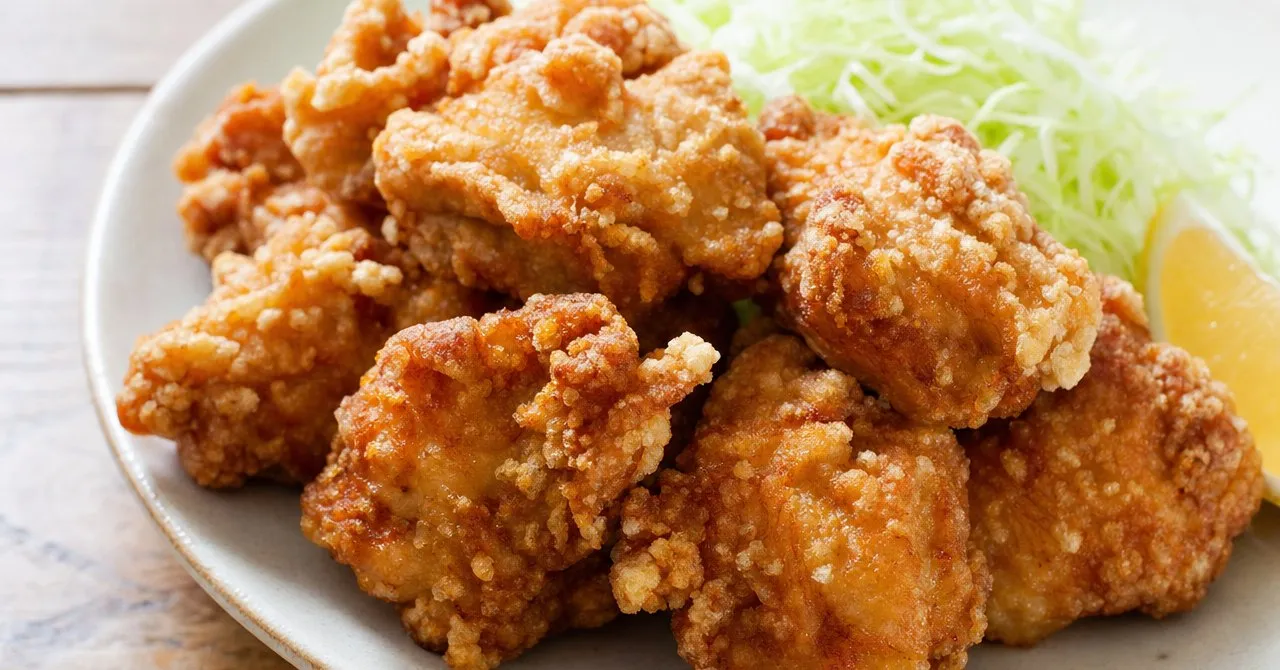
Some widely read English-language recipes describe karaage as chicken in a soy-ginger marinade, coated in potato starch and fried twice. Japanese sources draw the lines differently. Potato starch is part of the definition of a related dish, tatsuta-age. Karaage itself is defined more loosely.
The short answer: karaage names a method, frying food in a light coating of flour or starch, and Japan’s karaage association names both wheat flour and potato starch, calling karaage “fairly free” to make. Tatsuta-age is the one with fixed rules: a soy-based marinade and, in most dictionaries, potato starch. Zangi is what Hokkaido calls fried chicken, and Japan’s agriculture ministry describes it as more strongly seasoned. The definitions here come from dictionaries, an industry association, the agriculture ministry’s food-culture pages and recipes, not from a food standard, and they don’t fully agree.
Below: what Japanese dictionaries, the agriculture ministry and food companies say, then a karaage recipe adapted from Ajinomoto.
The short version
| Karaage (唐揚げ) | Tatsuta-age (竜田揚げ) | Zangi (ザンギ) | |
|---|---|---|---|
| What the name marks | A method: coat lightly, fry | A specific seasoning and coating | A regional name (Hokkaido) |
| Coating | Wheat flour, potato starch, or both | Potato starch in most dictionaries; one also allows flour | Wheat flour in the agriculture ministry’s recipe |
| Marinade | Varies; soy, sake and ginger are common | Soy-based, often with mirin or sake | Soy-based, described as stronger than typical karaage |
| Main ingredient | Anything: chicken, fish, vegetables, other meats | Mackerel and chicken most often | Chicken (MAFF notes the name is also used for fried octopus, salmon and more) |
| Source | Japan Karaage Association; dictionaries | Heibonsha, Shogakukan and Kodansha dictionaries; Kikkoman | Agriculture ministry (MAFF); Japan Karaage Association |
Karaage: a method, not a fixed recipe
The Japan Karaage Association (日本唐揚協会) is an organization devoted to the dish. It defines karaage as a cooking method that uses frying oil, and the food made that way. On coatings, it names both:
唐揚げに使われる粉は「小麦粉」と「片栗粉」です。 — The powders used for karaage are wheat flour and katakuriko (potato starch). — Japan Karaage Association
It doesn’t limit karaage to chicken, either: fish, vegetables and other meats fried this way are all karaage, in the association’s words.
Japanese dictionaries describe it in similar terms, but they don’t fully match. The Britannica International Encyclopedia (Japanese edition) sorts fried foods into three groups:
- Su-age (素揚げ): fried with no coating at all, like potatoes or eggplant.
- Kara-age: the surface dusted with “wheat flour, starch” before frying.
- Koromo-age (衣揚げ): fried in a batter or breading. The examples given are tempura and panko-breaded foods.
Shogakukan’s Nipponica encyclopedia, by contrast, says karaage is fried with a generous coat of wheat flour and doesn’t mention starch. The karaage association, by contrast, describes food thinly dusted (薄くまぶして) with flour, potato starch or the like. So Japanese references differ on both the type of coating and how much of it to use. What they share is the idea of a dry coating, as opposed to bare frying or a batter.
The name is also less settled than it looks. The association writes it 唐揚げ and lists 空揚げ (“empty” or “bare” frying) as another spelling. It suggests that 唐 (the Tang dynasty, long shorthand in Japan for things from abroad) may have come into the name because imported things were associated with China, but says plainly that this can’t be stated for certain.
Tatsuta-age: where the potato starch rule actually lives
The same association that calls karaage “fairly free” draws a sharp line around tatsuta-age:
唐揚げは作るうえで割と自由なんですが、竜田揚げは調味料と粉が決まっています。 — Karaage is fairly free to make, but tatsuta-age has set seasonings and a set coating. — Japan Karaage Association
Three Japanese dictionaries on Kotobank describe those rules:
- Nipponica (Shogakukan): chicken flattened, soaked in soy sauce, dusted with katakuriko, and fried. Pork, mackerel, tuna, bonito and whale are also listed as suitable.
- Kodansha’s dictionary of world cooking: food marinated in soy sauce, mirin, sake and the like, then coated in katakuriko and fried. Chicken and mackerel are typical.
- Heibonsha’s World Encyclopedia is the exception. It says the marinated food is coated in “katakuriko, wheat flour, and so on,” so in its definition flour is acceptable too.
Kikkoman’s basic recipe for mackerel tatsuta-age follows the majority: a soy-sugar-ginger marinade, then potato starch only. Kikkoman notes that potato starch fries up crisp with a whitish, uneven finish.
The name comes from the Tatsuta River in Nara, famous for autumn maples. All three dictionaries say the reddish-brown color of the fried, soy-stained surface was likened to the maple leaves.
This is where the common English picture gets interesting. When an English recipe treats potato starch as what makes karaage karaage, it is describing what Japanese dictionaries mostly say about tatsuta-age. Karaage may use potato starch. Tatsuta-age, in most definitions, does.
Zangi and other regional names
Zangi (Hokkaido)
Japan’s Ministry of Agriculture, Forestry and Fisheries (MAFF) includes zangi in its regional food database:
「ザンギ」は一般的な鶏の唐揚と比べ味付けが濃いのが特徴。 — Zangi is distinguished by stronger seasoning than ordinary chicken karaage. — MAFF, Uchi no Kyōdo Ryōri: Zangi, Hokkaido
The ministry describes the marinade as a sweet-savory, soy-based sauce, though its own sample recipe contains no sugar or mirin. That recipe marinates the pieces in sake, soy sauce, pepper, ginger and garlic for one hour to half a day, then dusts them thinly with wheat flour. MAFF adds that the name now also covers other foods coated and fried, such as tako zangi (octopus) and sake zangi (salmon), and that both bone-in and boneless versions exist, with boneless more common in Hokkaido shops.
The usual origin story points to Kushiro, in eastern Hokkaido. MAFF says zangi is said to have started around 1955 at a chicken restaurant in the city’s Suehiro entertainment district. The karaage association tells the same story but gives 1960. Both repeat the same naming theory: the Chinese fried-chicken dish 炸鶏 (Mandarin zhájī, which Japanese sources render as zāchī or zāgī) gained an extra “n” so the name would carry un (運), luck. MAFF calls it one theory, and the association cites a Kushiro zangi promotion group for it. Treat the exact year as uncertain.
The association adds that the line between zangi and karaage has become blurry, and the two are now often treated as the same food, with zangi as a regional word for a slightly stronger-seasoned version.
Other names, and why they don’t follow a system
A 2016 issue of MAFF’s magazine aff surveyed regional chicken dishes. Several are fried chicken under other names:
| Dish | Region | What MAFF says |
|---|---|---|
| Senzanki (せんざんき) | Eastern Ehime | Karaage from the Tōyo area, with well-absorbed seasoning |
| Sanzoku-yaki (山賊焼) | Nagano | Large bone-in pieces in a garlic-soy marinade, coated in potato starch and deep-fried, despite yaki (“grilled”) in the name |
| Tebasaki karaage (手羽先唐揚げ) | Nagoya, Aichi | Chicken wings fried with no coating, usually twice, first low and then high |
| Tori-ten (とり天) | Oita | Bite-size chicken fried as tempura, eaten with kabosu-citrus soy sauce or ponzu, and hot mustard |
Nagoya’s wings carry the word karaage but are, by the encyclopedia definition above, su-age. Oita’s tori-ten is chicken in tempura batter. Local names don’t follow the dictionary categories.
Oita’s city of Nakatsu is also known for karaage. In an interview published on an Oita Prefecture website, Nishigori Nobuyoshi, representative director of Bungoya Honten, describes Nakatsu karaage as chicken seasoned well with soy sauce, garlic and ginger, so it needs no dipping sauce. He adds that the “Nakatsu karaage” name itself caught on only during the boom in local specialty foods.
Where karaage sits among Japanese fried foods
The clearest way to separate Japanese fried dishes is by what touches the oil:
| Su-age | Karaage | Tatsuta-age | Tempura | Furai / katsu | |
|---|---|---|---|---|---|
| Coating | None | Dry flour and/or starch | Dry potato starch (mostly) | Wet batter of flour and cold water | Panko breading |
| Marinade | Not part of the definition | Common | Soy-based, defining | Not part of the definition | Not part of the definition |
Tempura is a wet batter, and Nisshin stresses mixing it only lightly, never too much. See Tempura and Tentsuyu: How Japan Does It. Furai and katsu add a breadcrumb layer; panko is covered in Shokupan Is Not Milk Bread. Karaage and tatsuta-age skip the wet stage entirely.
What English-language recipes say
Three widely read English pages show the range.
Just One Cookbook coats its karaage in both flour and potato starch (or cornstarch), which matches the Japanese definitions. Its FAQ describes tatsuta-age as coated only in potato starch, which matches most Japanese dictionaries.
Chowhound’s twice-fried karaage uses 100% potato starch, which the article says is the recipe developer’s preference. It also notes that wheat flour, especially fine cake flour, “is also traditionally used for karaage preparations.” That is a fair description of a choice, not an error.
Rasa Malaysia’s “Japanese Fried Chicken” is, in the author’s own words, tatsutaage, and it gets the river name and the potato-starch coating right. One line doesn’t hold up, though:
“karaage calls for sesame oil, and hence it’s sometimes called sesame fried chicken” — Rasa Malaysia
None of the Japanese sources consulted for this article mention sesame oil as part of karaage: not the karaage association, the agriculture ministry, Ajinomoto, Nisshin, Kikkoman, or the dictionaries. Adding sesame oil is a perfectly good choice; Just One Cookbook puts half a teaspoon in its marinade. It just isn’t something karaage requires.
Do you have to fry twice?
Many English recipes treat double frying as the defining technique. Japanese guidance makes it depend on size. Nisshin Seifun Group, the Japanese flour maker, says:
- Pieces around 20–25 g (under 1 oz) don’t need a second fry. About 3 minutes at 338°F (170°C) is enough.
- Pieces of 30 g (about 1 oz) or more benefit from it, because trying to cook a large piece through in one go tends to burn the outside. For 30–35 g pieces, Nisshin suggests 2 minutes, a 4-minute rest, then 1 more minute, both at 338–356°F (170–180°C).
Ajinomoto’s recipe below uses bite-size pieces and one fry with a short high-heat finish. Chowhound fries twice, at 325°F (about 163°C) and then 375°F (about 191°C). Neither approach is wrong.
Karaage — serves 2
Adapted from Ajinomoto’s published recipe 鶏のから揚げ (Ajinomoto Park). Not kitchen-tested by this site.
For measuring, Japanese tablespoons and teaspoons (15 mL and 5 mL) are close enough to US ones to use as written. See Japanese Recipes in an American Kitchen.
Chicken and seasoning
- 1 boneless chicken thigh, 250 g (about 9 oz)
- 1 tsp granulated chicken stock (Ajinomoto specifies its own Marudori Gara Soup; granulated chicken bouillon is the nearest common product type)
- 2 tsp sake
- 1 tsp grated fresh ginger
- 1 tsp soy sauce (see Japanese soy sauce types)
- A pinch of pepper (Ajinomoto doesn’t specify black or white)
Coating
- 3 tbsp hakurikiko (Japanese soft wheat flour). Ajinomoto specifies soft flour. Among the English recipes cited, Chowhound mentions fine cake flour as a traditional choice, and Just One Cookbook uses all-purpose.
- 1 tbsp katakuriko (potato starch)
For frying
- Neutral vegetable oil, enough to reach 3 cm (about 1¼ in) in the pot or skillet
- Lettuce and lemon to serve, as Ajinomoto suggests
Method
- Cut the chicken into bite-size pieces. In a bowl, combine the chicken, chicken stock, sake, ginger, soy sauce and pepper. Massage until the liquid is absorbed and none is left in the bowl. Ajinomoto gives no resting time.
- Pour oil into a pot or frying pan to a depth of 3 cm (about 1¼ in) and heat it to 320°F (160°C). Ajinomoto calls this low temperature.
- Right before frying, add the flour and potato starch to the chicken and work them in well. Add the pieces to the oil quickly.
- Fry over medium heat for 3–4 minutes, turning them over as they cook.
- Turn the heat to high and fry for about 1 more minute, until the outside is crisp. Lift each piece and let the oil drain back into the pot before taking it out.
For chicken, the US government’s FoodSafety.gov chart gives a safe minimum internal temperature of 165°F (74°C) for all poultry, thighs included, measured with a food thermometer. Nisshin’s guidance for pieces that are still raw inside is to microwave or refry them.
A note on oil temperature: Ajinomoto starts low and finishes hot. Nisshin recommends 338–356°F (170–180°C) throughout. MAFF gives about 347–356°F (175–180°C) as the standard range for meat and fish, and advises frying no more than will cover about half the oil’s surface at once, so the temperature doesn’t drop too far.
Two coating details differ between Japanese sources. Ajinomoto works the flour in just before frying. Nisshin suggests letting the coated chicken sit 10–15 minutes so the coating sets, comes off less and fries up crisper. Kikkoman, for its potato-starch tatsuta-age, says to fry right away. Follow the source whose recipe you are using.
USDA’s Food Safety and Inspection Service warns never to use water on a grease fire, and says a kitchen fire extinguisher or covering the fryer with a metal lid is the best way to put one out.
If you want tatsuta-age
Kikkoman’s basic recipe for mackerel tatsuta-age (serves 2) marinates 200 g (about 7 oz) of mackerel fillet in 1½ tbsp soy sauce, 2 tsp sugar (about 6 g; Japanese recipes usually mean soft white jōhakutō) and the juice of a knob of ginger (about 6 g) in the refrigerator for 20–60 minutes. The pieces are patted lightly, dusted with 4–5 tbsp potato starch and fried immediately. Kikkoman shallow-fries them in 200 mL (about ¾ US cup + 1 tbsp) of oil at around 338°F (170°C), roughly 4 minutes in all, spooning hot oil over the parts that stick out. For chicken, Japanese dictionaries describe the same soy marinade and starch coat but don’t give fixed amounts.
FAQ
What is the difference between karaage and tatsuta-age? In Japanese definitions, karaage is the broader method: food dusted with flour, starch or both and fried. Tatsuta-age is a specific style with a soy-based marinade and, in most dictionaries, a potato-starch coating. The karaage association puts it this way: karaage is fairly free; tatsuta-age has set seasonings and a set coating.
What is zangi? Hokkaido’s word for fried chicken. Japan’s agriculture ministry describes it as more strongly seasoned than ordinary karaage, with a soy-based marinade, and traces it to Kushiro. The karaage association says the boundary between zangi and karaage has become blurred.
Is karaage made with flour or potato starch? Either, or both. The Japan Karaage Association names both wheat flour and potato starch. Ajinomoto’s recipe uses three parts soft wheat flour to one part potato starch.
Do you have to double-fry karaage? Not for small pieces. Nisshin says pieces of about 20–25 g don’t need it, and recommends a second fry for pieces of 30 g or more.
Can I use cornstarch instead of potato starch? Just One Cookbook and Rasa Malaysia both offer cornstarch as a substitute. The Japanese sources consulted for this article use wheat flour and potato starch and don’t discuss cornstarch, so the difference in texture is not covered here.
Is karaage always chicken? No. The karaage association counts fish, vegetables and other meats fried the same way as karaage. Chicken is what most people picture, the association says, but it isn’t the only option.
How this article was researched
The definitions in this article come from Japanese-language sources: the Japan Karaage Association, Japan’s Ministry of Agriculture, Forestry and Fisheries, and Japanese dictionaries and encyclopedias (Heibonsha, Shogakukan, Kodansha, Britannica Japan) as published on Kotobank. Cooking guidance comes from Ajinomoto, Nisshin Seifun Group and Kikkoman. Quotations from Japanese sources are kept short and translated by us. The recipe is adapted from Ajinomoto’s published recipe and has not been kitchen-tested by this site. Where sources disagree, as on the coating for tatsuta-age and the year zangi began, we say so. US food-safety figures come from FoodSafety.gov and the USDA.
Sources
Japanese sources:
- 唐揚げとは — Japan Karaage Association: what karaage is
- 竜田揚げ — Kotobank: tatsuta-age (Heibonsha, Nipponica, Kodansha)
- 揚げ物 — Kotobank: fried foods (Nipponica, Britannica Japan)
- うちの郷土料理「ザンギ 北海道」 — MAFF: zangi, Hokkaido
- aff 2016年12月号 日本各地の郷土鶏料理 — MAFF: regional chicken dishes
- 家庭で揚げ物をする際に、どうすれば上手に揚げることができますか。 — MAFF: frying at home
- オオイタカテテ「中津からあげの魅力と歴史」 — Oita Prefecture: Nakatsu karaage
- 鶏のから揚げ — Ajinomoto Park: chicken karaage recipe
- から揚げ|こむぎ粉料理の基礎とコツ — Nisshin Seifun Group: karaage basics
- さばの竜田揚げ(基本の和食085) — Kikkoman: mackerel tatsuta-age
- 天ぷら|こむぎ粉料理の基礎とコツ — Nisshin Seifun Group: tempura basics
US food safety:
English-language examples: