Yōshoku and Chūka: Japan's Own "Western" and "Chinese" Food
Omurice, napolitan, doria, ramen and tenshinhan grew up in Japan. What yōshoku and chūka mean, and who claims each dish, with sources.
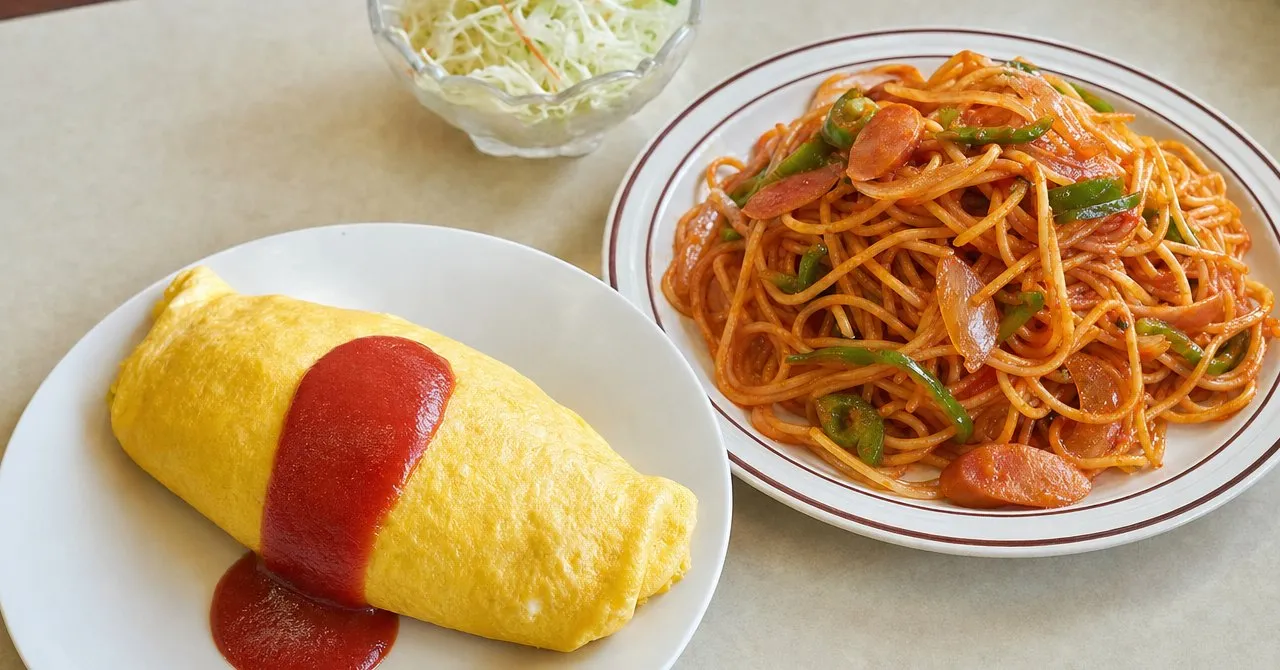
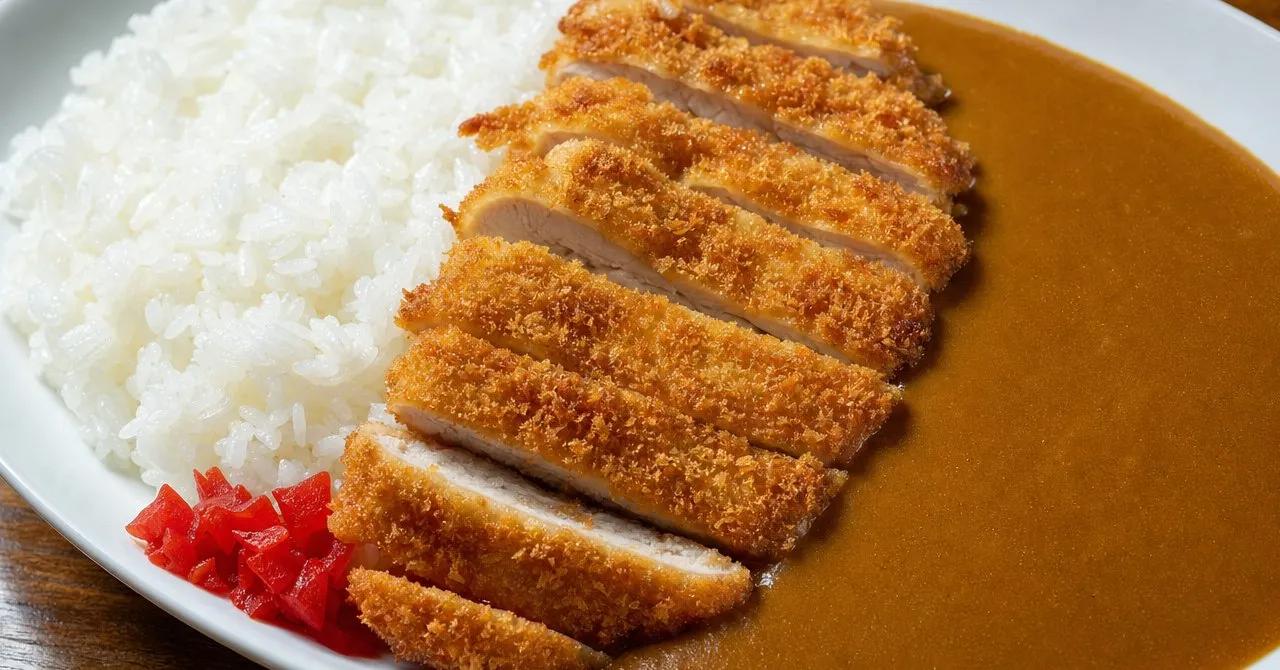
Omurice, spaghetti napolitan, doria, tonkatsu and curry rice are yōshoku, Japan’s “Western food.” Ramen, tenshinhan, ebi chili and hiyashi chūka are chūka, its “Chinese food.” All of them took their current shape in Japan. The English-language food sites we checked already say so, so this page isn’t a correction.
What’s harder to find in one place is the evidence: who claims each dish, when, and how solid the claim is. Some origin stories come from a hotel’s own press release. Some come from a tourism site that hedges with “there is a theory.” Others come from a magazine feature that never mentions a rival.
The short answer: yōshoku and chūka are Japanese categories, not just translations. Japanese dictionaries define them simply, while an encyclopedia and the dishes’ histories show how much of the food is Japanese.
What “yōshoku” means: two layers
A Japanese dictionary’s answer for 洋食 is short:
「西洋風の料理や食事。西洋料理。⇔和食。」 “Western-style cooking or meals. Western cuisine. Opposite: washoku (Japanese food).” — Digital Daijisen, via Kotobank
The Nihon Kokugo Daijiten says nearly the same thing. Its earliest citation is from a Yokohama newspaper dated January 1872, so the word was in print early in the Meiji era.
The Sekai Daihyakka Jiten (World Encyclopedia, revised edition) goes further. Its entry sets yōshoku against “Western cuisine,” the collective cooking of Britain, France, Italy, Germany, the US and other countries:
「西洋の料理を意味することばだが,……洋食には多分に日本的な要素がふくまれている。」 “It is a word meaning Western food, but… yōshoku contains a great deal that is Japanese.” — Sekai Daihyakka Jiten, revised edition, via Kotobank
The entry traces a shift. Western cooking began as Meiji-era banquet food for the elite. Town cooks then adapted it, and by the Taishō era (1912–1926) it was everyday food called yōshoku, served at yōshoku-ya. The entry credits the result to Japanese tastes shaped by rice, miso and soy sauce. Its examples include cutlets, menchi bōru (minced-meat balls), croquettes, rice curry, hayashi rice and omurice.
That gap is the point. In plain dictionary terms, yōshoku is “Western food.” But the dishes the word brings to mind are Japanese creations in a Western style. Tasting Table calls omurice “a Western-style dish that has developed independently in Japan,” which captures the second layer well.
What “chūka” means
The full term is chūka ryōri (中華料理), Chinese cooking. Here the dictionaries split. The Nihon Kokugo Daijiten treats it as identical to Chūgoku ryōri (中国料理), Chinese cuisine; its cited example is from Masamune Hakuchō’s 1949 work Ningen-girai. The Digital Daijisen adds a second meaning:
「「中国料理」に同じ。また、卓袱料理・普茶料理など、日本でアレンジされたものをいう。」 “Same as ‘Chinese cuisine.’ Also refers to food arranged in Japan, such as shippoku and fucha cuisine.” — Digital Daijisen, via Kotobank
So for chūka, one dictionary already includes the Japanese layer, though its examples are older styles, not ramen or tenshinhan.
Yōshoku: who claims what
| Dish | Claimant | Date in the claim | What the source says | Source type |
|---|---|---|---|---|
| Omurice | Renga-tei, Ginza, Tokyo | Opened 1895; “some say” 1900 (Tasting Table) | Called the originator of omurice and credited with the name | Travel site, TV feature, US food site |
| Omurice | Hokkyokusei, Osaka | 1925 (opened 1922) | “There is a theory” it was born here | Osaka tourism site |
| Napolitan | Hotel New Grand (Irie Shigetada, 2nd postwar executive chef) | After the requisition ended in 1952 | Irie reworked the ketchup spaghetti American soldiers had eaten during the occupation | Hotel website, press release |
| Doria | Hotel New Grand (Saly Weil) | Weil arrived Oct. 29, 1927; no year for the dish | Weil created it for a guest who felt unwell | Hotel press release |
| Pudding à la mode | Hotel New Grand | Postwar occupation | Created by the hotel’s pastry chef | Hotel press release |
| Pork cutlet | Renga-tei | Opened 1895 | Called the originator | Travel site, magazine |
| Tonkatsu | Shimada (Ponta Honke founder) / Ponchiken, Ueno, Tokyo | Ponta Honke founded 1905; Ponchiken 1929 (Waraku) | Accounts give different roles; Waraku calls origins unsettled | Owner interview; magazine (humor format) |
| Curry rice | — | — | See Japanese curry is not Indian curry | — |
Omurice: two restaurants
Osaka’s tourism site, osaka-info.jp, tells the Hokkyokusei story with care: there is “a theory” that omurice was born in Osaka in 1925. A regular with a weak stomach ate an omelet and plain rice every day, so the owner wrapped ketchup rice in a thin omelet for him. Asked what it was, the owner named it on the spot:
「オムレツとライスを合わせたオムライスでんな」 “It’s omurice, omelet and rice put together.” — the owner, as quoted on osaka-info.jp
The page dates the restaurant to 1922 and mentions no rival.
Renga-tei in Ginza has its own claim. LIVE JAPAN, a travel guide, gives its founding as 1895 and calls it the originator of omurice as well as the pork cutlet. A 2026 TV Tokyo feature describes Renga-tei as the restaurant regarded as having named “omurice” and created something close to today’s dish, without giving a year. Tasting Table’s 2023 article says “some say” omurice appeared there in 1900, and declines to pick a winner. We didn’t find a source from the restaurant itself giving 1900.
Both restaurants are credited with the name. Neither claim is settled.
Napolitan: what the hotel says
Hotel New Grand’s July 2024 press release lists spaghetti napolitan among its “発祥メニュー” (dishes that originated at the hotel), alongside seafood doria and pudding à la mode. The hotel’s own “origin” page goes further. It says the hotel was requisitioned as quarters for GHQ officers until 1952, and that American soldiers there often ate boiled spaghetti seasoned with salt and pepper and tossed with tomato ketchup. After the requisition ended (接収解除後), with a large stock of the spaghetti they had brought left behind, Irie Shigetada, the hotel’s second postwar executive chef, worked to create a spaghetti dish fit for the hotel. The page gives no year.
Tasting Table’s 2026 article tells the same story with hedges (“is believed to,” “reportedly”), dates it to “the 1950s” (the hotel’s page gives no year, only “after the requisition ended”) and says he used tomato purée. The purée doesn’t appear on the hotel’s page, which describes the hotel’s own sauce as made with fresh tomatoes, canned tomatoes and tomato paste.
For pudding à la mode, the hotel tells an occupation-era story. Its 2024 release says a pastry chef of the time created it to please American officers and their wives, and that the wives named it.
Doria: the best-documented story
Doria, a rice gratin, has the clearest primary source of any dish here:
「ホテルニューグランドの発祥メニューである「ドリア」は、初代総料理長サリー・ワイルが考案したお米を使用したグラタン料理です。」 “Doria, a dish that originated at Hotel New Grand, is a rice gratin created by the first executive chef, Saly Weil.” — Hotel New Grand press release, October 17, 2024
The release describes Weil as a Swiss chef invited from Paris for the hotel’s opening in 1927. He arrived in Japan on October 29, 1927, at 30. According to the hotel, a foreign banker staying there felt unwell and asked for something easy to swallow, and Weil improvised the dish.
One caution: the release doesn’t say what year Weil created doria. “Created in 1927” goes beyond the source; “created by Saly Weil, who arrived in 1927” doesn’t. The hotel calls October 29, the day Weil arrived, “Doria Day.” Its July 2021 press release says the Japan Anniversary Association (Nihon Kinenbi Kyōkai) officially recognized the day.
From cutlet to tonkatsu
In a 2019 interview on Mitsubishi Electric’s CLUB ME member site, part of a series on a century of the Japanese table, Shimada Yoshihiko, fourth-generation owner of Ponta Honke in Ueno, describes tonkatsu as the veal cutlet that came from the West in the Meiji era, the côtelette or Wiener schnitzel, adapted to pork. The article says the restaurant was founded in 1905 by a Shimada who had cooked Western food in the Imperial Household Ministry’s kitchens, and that the founder reportedly went to teach technique at Ponchiken, then in Ueno.
A 2020 piece on Waraku, a Shogakukan magazine site, written as a light “imagined interview” with tonkatsu itself, tells it differently. It credits Renga-tei’s owner, Kida Motojirō, with devising the cutlet. It says a former Imperial Household cook named Shimada joined Ponchiken in 1929 and is said to have written the name “とんかつ” in hiragana. Then it adds that the origins remain unclear.
The two accounts give Shimada different roles (visiting teacher vs. Ponchiken’s cook from 1929) and write his given name with different kanji (信治郎 vs. 新二郎). We found no source that settles who first used the name “tonkatsu.” For the sauce that goes with it, see Japanese sauce types.
Chūka: who claims what
| Dish | Claimant | Date in the claim | What the source says | Source type |
|---|---|---|---|---|
| Ramen | Rairaiken, Asakusa, Tokyo | 1910 | “The first ramen shop” of its kind (MAFF); the shop that started the ramen boom (Yokohama tourism site) | Government; city tourism site |
| Tenshinhan | Rairaiken (Tokyo) or Taishōken (Osaka) | None given | Two competing theories | Travel site (JTB) |
| Ebi chili | Credited to Chen Kenmin (uncertain) | 1958 (English source only) | He added ketchup to soften the heat | Retail recipe blog (English); not confirmed in Japanese sources |
| Mapo tofu, Japanese style | Chen Kenmin | Arrived 1952 | Adapted and popularized it; didn’t invent it | Magazine, news column |
| Hiyashi chūka | Yōsukō Saikan, Jinbōchō, Tokyo | 1933 | Created by the second-generation owner | Magazine feature |
| Hiyashi chūka | Ryūtei, Sendai | 1937 | “It is said” the founder introduced it | News feature |
Ramen
Japan’s Ministry of Agriculture, Forestry and Fisheries (MAFF), in a story made with the Shin-Yokohama Ramen Museum, describes ramen as Chinese noodle cooking fused with Japanese food culture. On Rairaiken, it’s specific:
「1910年に東京・浅草にオープンした「来々軒」は、中国の麺料理と日本の食文化を融合させた最初のラーメン店でした。」 “Rairaiken, which opened in Asakusa, Tokyo, in 1910, was the first ramen shop to fuse Chinese noodle cooking with Japanese food culture.” — MAFF, via Google Arts & Culture
Yokohama’s official tourism site adds that Ozaki Kan’ichi founded Rairaiken in 1910 after bringing in 12 Chinese people from Guangdong who had been living in Yokohama’s Chinatown. It also says the true birthplace of Japanese ramen is still debated, and that the Ramen Museum calls Rairaiken the shop that started Japan’s ramen boom. Among the museum’s reasons: it spread a new kind of business selling everyday dishes cheaply, namely shina soba (an early name for ramen), wontons and shumai.
Tenshinhan
Tenshinhan, a crab omelet over rice under a thickened sauce, has a name that uses 天津 (Tenshin), the Japanese reading of Tianjin. FUN! JAPAN, a travel site run by JTB, calls it “a Japanese original”: a Cantonese crab-and-egg dish, fu yung hai, adapted by serving it over rice with a sweet-and-sour sauce. It credits two places, Rairaiken in Tokyo and Taishōken in Osaka, and notes a regional split: a sweet, ketchup-based sauce around Tokyo, a lighter soy-based one in the Kansai region around Osaka. Zojirushi’s English blog tells the same two-restaurant story. Neither gives a year.
Mapo tofu, ebi chili and Chen Kenmin
Serai, a Shogakukan magazine, says Chen Kenmin (陳建民) came to Japan from Sichuan in 1952 and became a Japanese citizen. It says he cooked his home region’s food with Japanese seasonings and toned down the heat for Japanese diners. A 2022 Gendai Business column says he opened Shisen Hanten in Akasaka, Tokyo, and shared the recipe on NHK’s cooking program Kyō no Ryōri, and it’s clear about one thing:
「だが、麻婆豆腐は陳建民氏の発明品ではない。」 “But mapo tofu was not Chen Kenmin’s invention.” — Kondo Daisuke, Gendai Business, October 23, 2022
A 2017 press release about Shisen Hanten’s Singapore restaurant says Chen opened Japan’s first Sichuan restaurant in 1958.
Ebi chili, shrimp in chili sauce, is credited to Chen in English, but that link is uncertain. The only source we found is Japanese Taste, an English-language site that also sells Japanese groceries. It says Chen introduced the dish at Shisen Hanten in 1958, based on the Chinese gan shao xia ren (干焼蝦仁), and that “to mellow the spiciness of doubanjiang, he added ketchup.” None of the Japanese sources we read mentions ebi chili or ketchup.
Hiyashi chūka
A 2017 Serai article credits Yōsukō Saikan in Jinbōchō, Tokyo, quoting the restaurant: 「冷やし中華はうちの二代目が始めました」 (“Our second-generation owner started hiyashi chūka”). It dates the dish to 1933 and says the owner was inspired by the cold mori soba at Kanda Matsuya, a nearby soba shop, then made more than 200 trial versions. The article presents the restaurant as the birthplace of hiyashi chūka and mentions no rival.
A 2023 All About article gives Sendai’s version: in 1937, “it is said,” the founder of the Chinese restaurant Ryūtei presented a cold noodle dish he’d devised to fellow members of a restaurant association. It also says the roots are disputed. We didn’t find either restaurant’s own record.
Japan’s “100-Year Food”
Japan’s Agency for Cultural Affairs names “food culture handed down across generations in a region” as “100-Year Food” (100年フード). It has three categories: “Tradition,” for local dishes continued since the Edo period; “Modern,” for food culture created in the Meiji and Taishō eras; and “Future,” with the motto “aim for 100 years!”
The cumulative prefecture-by-prefecture list attached to the agency’s March 2025 announcement (300 items in all, including 50 added that year) includes plenty of yōshoku and chūka:
- Noodles: Kitakata ramen (Fukushima), Sakata ramen (Yamagata), Sanmāmen (Kanagawa), Fujinomiya yakisoba (Shizuoka), Yokote yakisoba (Akita), Otaru ankake yakisoba (Hokkaido)
- Gyoza: Utsunomiya gyoza (Tochigi), Tsu gyoza (Mie)
- Yōshoku: Gunma’s and Fukui’s sauce katsudon, Borga rice (Fukui), Saga Sicilian rice, and “Navy-related food culture” (Navy curry, beef stew and nikujaga)
We didn’t see napolitan, doria or omurice as named items.
How to read an origin story
The evidence above comes in three kinds: the claimant’s own words (Hotel New Grand, the Ponta Honke owner), government bodies (MAFF, the Agency for Cultural Affairs), official tourism bureaus (Osaka, Yokohama), and media retellings. A claimant’s statement shows what it says, not that nobody else got there first. For the reverse, Japanese dishes that took shape outside Japan, see Japanese dishes born abroad.
FAQ
What is yōshoku?
Yōshoku (洋食) literally means “Western food.” In practice it usually means dishes developed in Japan in a Western style, such as omurice, hayashi rice, croquettes, tonkatsu and curry rice.
Where was omurice invented?
Two restaurants are credited. Osaka’s tourism site says there is a theory it was born at Hokkyokusei in Osaka in 1925. Renga-tei in Ginza, Tokyo, founded in 1895, is also called the originator, and Tasting Table notes that “some say” its version dates to 1900. Neither claim is settled.
Is spaghetti napolitan Italian?
No. Hotel New Grand in Yokohama says its second executive chef, Irie Shigetada, created it after the hotel’s postwar requisition ended in 1952, reworking the ketchup spaghetti American soldiers had eaten there.
Is Japanese Chinese food (chūka) the same as Chinese food?
Not always. The Digital Daijisen defines chūka ryōri as Chinese cuisine and also as Chinese food arranged in Japan. A JTB travel site calls tenshinhan a Japanese original, and Chen Kenmin adapted mapo tofu for Japanese diners.
How this article was researched
This article is built mainly on Japanese-language sources: dictionary and encyclopedia entries on Kotobank, Hotel New Grand’s official website and press releases, the Agency for Cultural Affairs’ 100-Year Food announcement and list, MAFF’s ramen story, and the tourism sites of Osaka and Yokohama. Where no official record exists, we used named magazine and news features and labeled them in the tables. English-language pages appear as examples of how these dishes are described in English. Japanese quotations were translated by us. This article includes no recipe, and nothing here was cooked or tasted by this site.
Sources
- 洋食 — Kotobank: Digital Daijisen, Nihon Kokugo Daijiten and Sekai Daihyakka Jiten entries on yōshoku
- 中華料理 — Kotobank: dictionary entries on chūka ryōri
- 「100年フード」及び「食文化ミュージアム」を認定しました — Agency for Cultural Affairs, 100-Year Food announcement, March 14, 2025
- 同 印刷用 — Agency for Cultural Affairs, printable release with category names (PDF)
- 「100年フード」都道府県別一覧 — Agency for Cultural Affairs, 100-Year Food list by prefecture (PDF)
- ラーメンの歴史と現在 — Ministry of Agriculture, Forestry and Fisheries with the Shin-Yokohama Ramen Museum, on Google Arts & Culture
- プリン・ア・ラ・モード パフェ — Hotel New Grand press release, July 25, 2024 (PDF)
- ドリアの日 — Hotel New Grand press release on doria and Saly Weil, October 17, 2024 (PDF)
- 「ドリアの日」制定 — Hotel New Grand press release, July 1, 2021, Doria Day recognized by the Japan Anniversary Association (PDF)
- ホテルニューグランド発祥 — Hotel New Grand official site, dishes that originated at the hotel
- オムライス — osaka-info.jp, Osaka tourism site, the Hokkyokusei story
- 淺草 來々軒 — Yokohama City Visitors Bureau, Rairaiken at the Shin-Yokohama Ramen Museum, 2020
- #06 とんかつも洋食篇 — Mitsubishi Electric CLUB ME member site, interview with Ponta Honke’s fourth-generation owner, 2019
- 「とんかつ」が語る — Waraku (Shogakukan), “imagined interview” on the origins of tonkatsu, 2020
- 銀座 煉瓦亭ほか — LIVE JAPAN, Ginza restaurants including Renga-tei, 2020
- オムライスの名店 — TV Tokyo Plus, feature including Renga-tei, 2026
- 実は日本発祥の意外な食べ物一覧 — FUN! JAPAN (JTB), Japanese-born dishes including tenshinhan
- 陳建民が伝えた四川料理の『麻婆豆腐』 — Serai (Shogakukan), Chen Kenmin and mapo tofu, 2023
- ガチ中華の旅 第2回 — Kondo Daisuke, Gendai Business, 2022
- 陳建太郎氏の四川飯店… — Mandarin Orchard Singapore press release via Kyodo News PR Wire, 2017
- 揚子江菜館「五色涼拌麺」 — Serai (Shogakukan), Yōsukō Saikan and hiyashi chūka, 2017
- 冷やし中華の豆知識 — All About News, hiyashi chūka origin theories, 2023
- The Hazy Origins Of Omurice — Tasting Table, 2023
- Ketchup Is The Unexpected Star Of This Retro Japanese Pasta — Tasting Table, 2026
- How to Make Ebi Chili — Japanese Taste (retail site blog), 2024
- Foreign Foods in Japan: Tenshindon — Zojirushi America, 2019