Mochi Ice Cream Started in Japan: Yukimi Daifuku and the US Story
Lotte launched Yukimi Daifuku, ice cream wrapped in mochi, in Japan in 1981. Mikawaya's mochi ice cream debuted in Hawaii in 1994. How the two stories fit.
Look up who invented mochi ice cream and you’ll usually get one name: Frances Hashimoto, who ran Mikawaya, the Japanese confectionery shop in Los Angeles’s Little Tokyo. One food site’s headline says the treat was “invented in the United States, not Japan.”
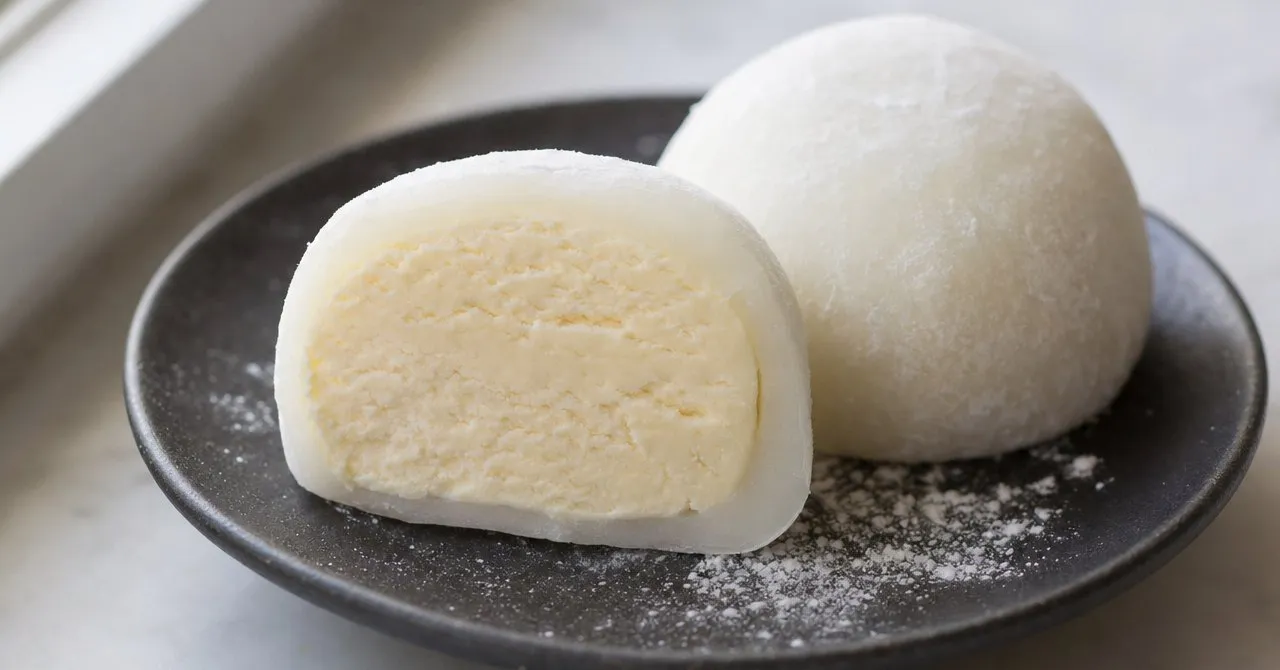
The record is more complicated. In October 1981, the confectionery company Lotte launched Yukimi Daifuku (雪見だいふく) in Japan: vanilla ice cream wrapped in a soft mochi skin, sold two to a pack. Lotte’s own corporate history calls it a huge hit. Mikawaya’s mochi ice cream came later. According to Hashimoto’s husband, Joel Friedman, it made its debut in Hawaii in April 1994, and he got the idea on a trip to Japan in 1984.
None of this takes anything away from Mikawaya. The company turned mochi ice cream into an American freezer-aisle staple, and that’s its own achievement. But ice cream wrapped in mochi was already being sold in Japan more than a decade before Mikawaya’s version reached US stores.
The short answer
- Japan had it earlier. Lotte’s corporate history lists Yukimi Daifuku’s launch in October 1981, more than a decade before Mikawaya’s US debut.
- Lotte’s first try used marshmallow, not mochi. According to a President Online interview with Lotte’s brand strategy department, the predecessor, Watabōshi (わたぼうし), launched in September 1980 with ice cream wrapped in marshmallow. Lotte switched to mochi for Yukimi Daifuku about a year later.
- Mikawaya popularized it in the US. Joel Friedman wrote that the idea came to him during a 1984 trip to Japan, and that the product debuted in Hawaii in April 1994. From there it went into sushi bars, Asian markets and Trader Joe’s.
- The dates in English sources don’t agree. Some say 1993, some 1994, some “the early 1990s.” Friedman’s own account says April 1994.
- The skin on Yukimi Daifuku isn’t pounded mochi. It’s made from mochi flour: Lotte uses habutae-ko, a fine glutinous rice flour, and the product’s ingredient list is led by sugar and starch syrup. That’s closer to what Japanese dictionaries call gyūhi, but Lotte calls it mochi.
Japan, 1980–1981: from marshmallow to mochi
Lotte moved into ice cream in March 1972, according to its corporate history page. Its big winter idea arrived in 1980.
A 2022 President Online article, based on an interview with Ōtsuka of Lotte’s brand strategy department, tells how the product started. The first version, Watabōshi, went on sale in September 1980 and wrapped ice cream in marshmallow. The inspiration was Tsurunoko (鶴乃子), a sweet made by the Hakata confectioner Ishimura Manseidō that the article says has been loved in Fukuoka for more than a century. Lotte confirmed the connection itself in a 2021 press release, which calls Tsurunoko the hint behind Yukimi Daifuku. As Ōtsuka tells it, the thinking was that a sweet like this might get people to eat ice cream in winter, in a warm room.
The next step was to replace the marshmallow with mochi. The President article notes the problem: mochi tends to harden when it’s cold. Ōtsuka said the team tested a huge number of combinations, including the variety and origin of the mochi flour, the ratio of sugars and the particle size, and built a new machine for wrapping the ice cream. Lotte keeps the exact formula to itself.
The result went on sale about a year after Watabōshi. Lotte’s history page sums it up:
「アイスクリームの常識を変えた空前の大ヒット商品となる。」 “It became an unprecedented hit that changed the conventional wisdom about ice cream.” — Lotte, corporate history (entry for October 1981)
The same timeline records Yukimi Daifuku being added to school lunches as a dessert in June 1984, a 35th-anniversary entry in 2016, a 40th-anniversary recipe change in 2021 that made the mochi springier, and a chilled (not frozen) version in 2024.
The product is still recognizably the 1981 idea. Lotte’s product page lists each pack as two pieces of 47 mL each (about 1.6 US fl oz), and classifies the frozen part under the Japanese category aisu miruku (“ice milk”).
Is the wrapper mochi or gyūhi?
English-language pages sometimes describe Yukimi Daifuku’s skin as gyūhi (求肥). Just One Cookbook, for example, calls it “a vanilla ice cream wrapped in gyuhi, a type of mochi.” The distinction is real, and it comes down to how the dough is made.
| Mochi (餅) | Gyūhi (求肥) | |
|---|---|---|
| Starting point | Whole glutinous rice (mochigome) | Glutinous rice flour (shiratamako or mochiko) |
| Method | Steamed, then pounded in a mortar | Cooked with sugar and starch syrup, kneaded until translucent |
| Sugar | Not part of the basic definition | A lot; one encyclopedia gives 2 parts sugar and 1 part starch syrup to 1 part flour |
| Dictionary source | Digital Daijisen | Nipponica; Heibonsha World Encyclopedia |
The Digital Daijisen dictionary defines mochi as glutinous rice that has been steamed and pounded in a mortar, then shaped. The Nipponica encyclopedia describes gyūhi this way:
「白玉粉を蒸して白砂糖、水飴を加え、加熱しながら半透明になるまで練り上げる。」 “Shiratamako is steamed, white sugar and starch syrup are added, and it is kneaded over heat until it turns translucent.” — Nihon Daihyakka Zensho (Nipponica), via Kotobank
The same entry explains the odd name. The sweet was originally written with the characters for “cow hide” (牛皮), because early versions were sweetened with kokutō (unrefined dark cane sugar), which gave them the color of cow hide. The characters were later changed to 求肥, which reads the same but avoids the image.
So where does Yukimi Daifuku fit? Lotte’s ingredient list, which covers the whole product, ice included, starts with sugar, starch syrup and glutinous rice flour, and the company says the skin uses habutae-ko, a fine grade of mochi flour. It doesn’t publish the skin’s own recipe. A flour-based, sweetened skin is closer to the dictionary’s gyūhi than to pounded mochi. But Lotte doesn’t use the word gyūhi on its Yukimi Daifuku brand or product pages. It calls the skin omochi and describes it like this:
「オリジナルレシピで作られた 冷凍下でもやわらかく弾力のあるおもち。」 “Mochi made to an original recipe that stays soft and springy even when frozen.” — Lotte, Yukimi Daifuku brand page
Japanese usage is looser than the strict definition. One Japanese food dictionary on Kotobank describes gyūhi itself as “mochi-like” (餅状のもの), so Lotte’s wording isn’t wrong. If you want to be precise, say the skin is made the gyūhi way. Keeping it soft in the freezer was the hard part: according to the President interview, Lotte’s developers adjusted the flour, the sugar ratio and the particle size to get there.
The American story: Mikawaya, 1984 and 1994
Mikawaya’s history goes back to the early 1900s in Little Tokyo. In a 2021 piece for the Rafu Shimpo, the Los Angeles Japanese American newspaper, Joel Friedman wrote that no one in the family knew exactly when the shop first opened, so they “always counted from 1910.” Frances Hashimoto took over the business in 1970, according to the Associated Press’s 2012 obituary, and grew it from a single shop into a much larger business.
Friedman’s account of mochi ice cream’s origin is the closest thing to a primary source on the American side. He wrote that in 1984, while the Olympics were in Los Angeles, he traveled to Japan and “came up with the idea of using a similar coating that we were using to make a specific type of Japanese pastry”: a coating like the one Mikawaya already used for one of its Japanese pastries, filled with good-quality ice cream instead of sweetened bean paste. When he got home, he and his wife decided it was worth pursuing. He didn’t say what he saw or ate in Japan, and he didn’t mention Lotte or Yukimi Daifuku.
The launch came a decade later. In Friedman’s words: “In April of 1994, mochi ice cream made its worldwide debut.” It started in Hawaii, where, he wrote, the product took 14% of the ice cream novelty market in its first three months. Then it moved into sushi bars, Asian markets and Trader Joe’s.
That’s a real accomplishment. Mikawaya took mochi ice cream from a Hawaii launch to Trader Joe’s shelves, and the AP credits Hashimoto with popularizing it. The American product is a legitimate American product. What doesn’t hold up is the claim that the basic idea, ice cream wrapped in mochi, started in the US, when a Japanese product was on sale more than a decade earlier.
What English-language pages say
Here’s how three widely read sources tell the story, next to what the primary sources show.
| Source | What it says | What the record shows |
|---|---|---|
| Tasting Table (2025) | “Mochi ice cream was invented by Frances Hashimoto”; “Mikawaya began selling this treat in 1993.” Headline: “Invented In The United States, Not Japan.” | Lotte launched mochi-wrapped ice cream in Japan in 1981. Friedman gives April 1994 for Mikawaya’s debut. We couldn’t find a primary source for 1993. |
| Just One Cookbook | Credits Hashimoto, “In the early 1990s,” and says the treat made “its first debut in Hawaii in 1994.” The author also recalls eating Yukimi Daifuku as a child. | Hawaii in 1994 matches Friedman’s account. The page also says Yukimi Daifuku “was a popular Japanese dessert back in the 80s,” which puts it before the “early 1990s” it gives for Hashimoto’s invention. |
| Associated Press (2012) | Says the company “popularized” mochi ice cream; “Some sources credit Hashimoto or her husband with inventing the treat and bringing it to market in the 1990s,” while “others list a South Korean company as creating it a decade earlier.” | The AP hedged on who invented it and didn’t name the other company. Lotte’s Japanese corporate history records the 1981 launch. |
Tasting Table leaves Japan out entirely. Just One Cookbook and the AP both hint at an earlier product but still frame the American version as the invention. Tasting Table also says Hashimoto first wrapped ice cream in mochi “in the 1980s.” We couldn’t confirm that from a primary source. Friedman’s own account dates the idea to 1984 and doesn’t say when the first test batch was made.
For more on how this kind of drift happens, see What English-language Japanese recipes get wrong.
So who invented mochi ice cream?
It depends on what you mean by “mochi ice cream.”
- Ice cream wrapped in a soft rice-based skin: Lotte was selling this in Japan from October 1981 as Yukimi Daifuku, after a marshmallow version in 1980.
- The multi-flavor mochi ice cream sold in American stores: Mikawaya developed it and launched it in Hawaii in April 1994. Frances Hashimoto and Joel Friedman are fairly credited for that.
What we can’t tell you is whether Friedman saw Yukimi Daifuku on his 1984 trip. He doesn’t say, and we found nothing that settles it. The two products may be a case of influence, or of two people arriving at a similar idea. The order of events, though, isn’t in dispute. A fair one-line summary: the earliest documented mochi-wrapped ice cream we found is Japan’s, from 1981, and Mikawaya made it an American hit in the 1990s.
Eating and storing it: what the manufacturer says
Lotte’s pages give a few practical details. They’re written for Japanese conditions, so here they are with conversions.
- Storage: Lotte’s product page says to keep Yukimi Daifuku at 0°F (−18°C) or below.
- Waiting before eating: The brand page’s “recommended ways to enjoy it” section lists an 8-minute wait at a room temperature of 77°F (25°C) as one option, noting that the time depends on your freezer model and how the product was stored.
- Microwave: The same section lists 8 seconds and 20 seconds at 600 W. Lotte says to always move the pieces to a plate before heating, with no plastic wrap needed. Lotte’s times are for a 600 W setting, so if your microwave runs at a different wattage, they won’t transfer directly.
- Choking: The product page carries this warning:
「お召し上がりの際はのどにつまらせないようご注意ください。」 “Take care not to choke when eating it.” — Lotte, Yukimi Daifuku product page
The page also says not to use the fork packed with it for anything else.
These instructions are for Lotte’s product. US brands have their own instructions, so follow the label on the box you bought.
FAQ
Who invented mochi ice cream?
The earliest documented version we found is from Japan: Lotte launched Yukimi Daifuku there in October 1981. In the US, Frances Hashimoto and Joel Friedman of Mikawaya developed the mochi ice cream that became popular in American stores. According to Friedman, it debuted in Hawaii in April 1994.
Is mochi ice cream Japanese or American?
Both, in different ways. The idea of wrapping ice cream in mochi is documented in Japan from 1981. The multi-flavor version sold in US grocery stores was developed and popularized by Mikawaya, a Los Angeles company with Japanese roots. Joel Friedman wrote that he got the idea on a 1984 trip to Japan.
What is Yukimi Daifuku?
It’s a frozen sweet made by Lotte in Japan: vanilla ice cream (classified in Japan as aisu miruku, “ice milk”) wrapped in a soft mochi skin, two pieces per pack, each 47 mL (about 1.6 US fl oz). Daifuku is a traditional mochi sweet. Lotte’s corporate history dates its launch to October 1981.
Is the outside of mochi ice cream real mochi?
Not in the strict sense. Traditional mochi is glutinous rice that’s steamed and then pounded. Yukimi Daifuku’s skin is made from mochi flour (Lotte uses habutae-ko), and the product’s ingredient list, which covers the ice too, is led by sugar and starch syrup. Lotte doesn’t publish the skin’s own recipe, but a flour-based, sweetened skin is closer to gyūhi (求肥), a sweetened rice-flour dough. Lotte still calls it mochi, and Japanese usage of the word is looser than the strict definition.
Did mochi ice cream come out in 1993 or 1994?
Sources disagree. Tasting Table says Mikawaya began selling it in 1993. Just One Cookbook and Joel Friedman’s own account say it debuted in Hawaii in 1994, and Friedman gives April 1994. We couldn’t find a primary source for 1993.
How long should I let mochi ice cream sit before eating?
Lotte doesn’t require a wait. Among its “recommended ways to enjoy it,” the brand page lists an 8-minute wait at 77°F (25°C) room temperature, noting that the time depends on your freezer and how it was stored. For other brands, follow the package directions.
How this article was researched
The Japanese side of this article is based on Lotte’s own pages: its corporate history timeline, the Yukimi Daifuku brand and product pages, and a 2021 press release. We also used a 2022 President Online interview with Lotte’s brand strategy department for the Watabōshi and development story, and Japanese dictionary and encyclopedia entries on Kotobank for the definitions of mochi and gyūhi. The American side relies on Joel Friedman’s 2021 first-person account in the Rafu Shimpo and the Associated Press’s 2012 obituary of Frances Hashimoto. Tasting Table and Just One Cookbook appear as examples of how English-language pages describe the origin. Japanese quotations were translated by us. This article includes no recipe, and nothing here was tested or tasted by this site.
Sources
- ロッテの歩み — Lotte, corporate history timeline (Yukimi Daifuku launch, October 1981)
- 雪見だいふく ブランドサイト — Lotte, Yukimi Daifuku brand page (mochi flour, how to enjoy)
- 雪見だいふく 商品詳細 — Lotte, Yukimi Daifuku product page (ingredients, storage, cautions)
- #禁断の雪見トースト 超熟コラボキャンペーン — Lotte press release, November 2021, naming Tsurunoko as the hint for Yukimi Daifuku (PDF)
- 40年の定番「雪見だいふく」のリニューアルで… — President Online, 2022, interview with Lotte’s brand strategy department
- 求肥 — Kotobank, dictionary and encyclopedia entries on gyūhi
- 餅 — Kotobank, dictionary and encyclopedia entries on mochi
- The Loss of a Little Tokyo Icon — Joel Friedman, Rafu Shimpo, 2021
- Frances Hashimoto, Los Angeles business leader who popularized mochi ice cream, dies at 69 — Associated Press via Fox News, 2012
- This Mochi Treat Was Invented In The United States, Not Japan — Tasting Table
- Mochi Ice Cream — Just One Cookbook